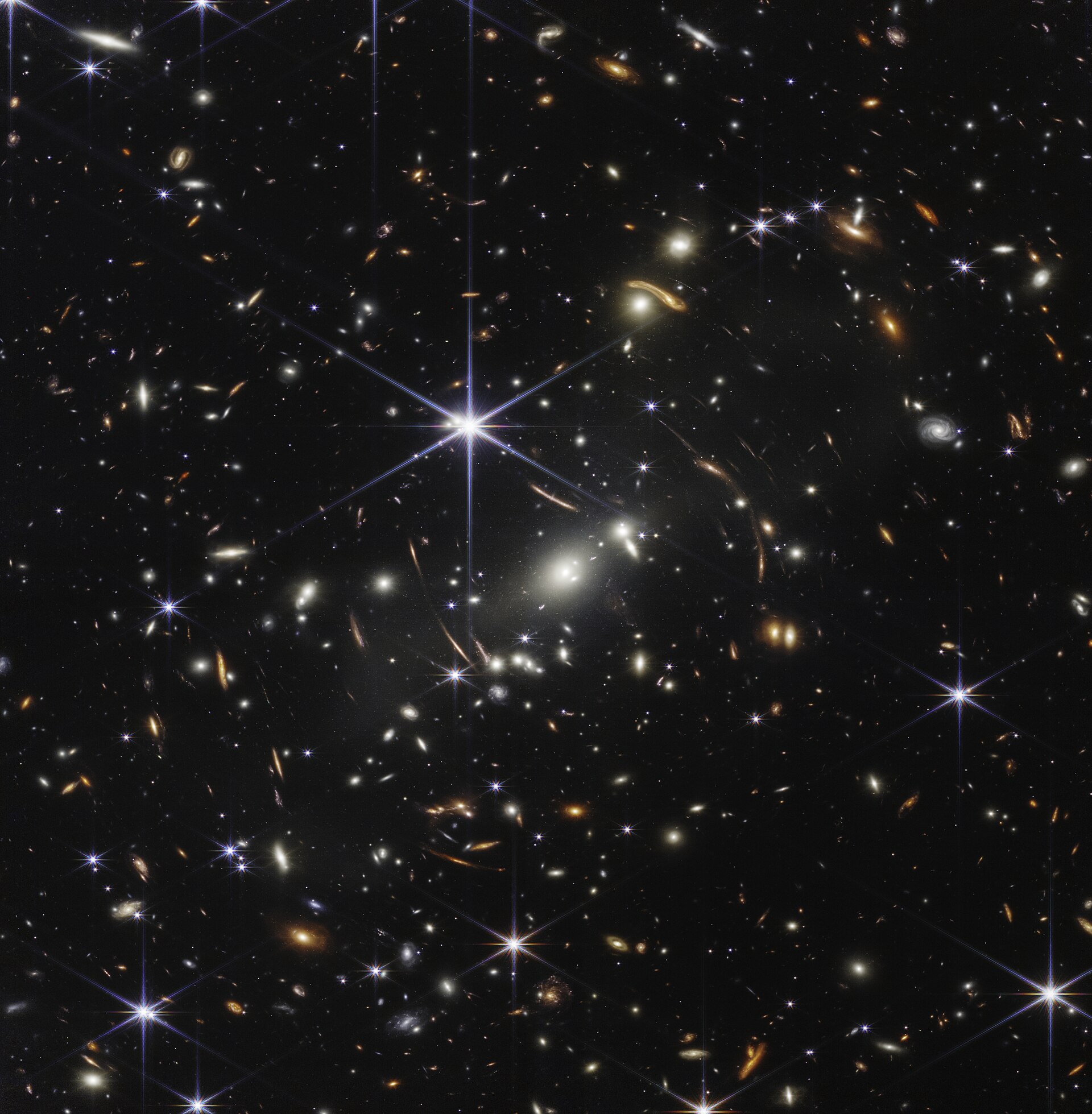
What reporters are seeing
Several major science outlets published striking accounts this week describing compact, very bright sources revealed in James Webb Space Telescope (JWST) images of the distant universe. EurekAlert! summarized the emerging story as "hidden stars" that could make early galaxies more massive than previously estimated. Nature ran a report under the headline that distant galaxies might be heavier than they appear, describing the basic claim as a potential revision to stellar mass estimates. Popular-science outlets including Universe Today and Space framed the finding as JWST exposing previously unseen luminous components inside early galaxies, while SciTechDaily ran a more sensationalized version calling one source effectively far brighter than expected.
Across the reporting reviewed, writers emphasized the visual and photometric oddness of these compact sources: they appear unusually red or compact compared with the surrounding galaxy light in Webb images and, if the reported redshifts and brightness estimates are correct, could contribute substantially to a galaxy’s total stellar mass. Several outlets described the effect as a potential systematic undercounting of mass in the first galaxies, which would matter for models of early galaxy formation and cosmic history. Coverage varied in tone and detail, from careful qualification in Nature to more dramatic language in some popular outlets.
What the published reports show — and what they do not
The accounts reviewed provide a consistent narrative: JWST imaging (primarily NIRCam) has revealed compact, very luminous sources in some high-redshift systems that were effectively hidden in previous datasets, and including those sources changes mass estimates for the host galaxies. However, the set of stories Freedom News reviewed does not include links to a public peer-reviewed paper or a posted preprint that lays out the data, methods, and detailed photometry. Likewise, none of the coverage supplied a direct link to a NASA or Space Telescope Science Institute (STScI) press release that discloses program IDs, a principal investigator, or MAST file locations for raw and reduced NIRCam or NIRSpec observations that would allow independent checking.
Because the primary technical record — the paper, the spectra, the redshift fits, and the cataloged photometry — was not supplied in the items reviewed, the key underlying questions remain open. Important open items include whether the sources have spectroscopic redshifts (strong confirmation of distance), how the team performed background subtraction and source deblending in crowded high-redshift fields, whether the luminosity estimates incorporate lensing magnification, and whether NIRSpec or other spectroscopic follow-up has ruled out alternative explanations. Those are the measurements that would move the story from a striking image-based claim to a tightly constrained physical inference about stellar mass at early times.
How scientists will — and should — test the claim
If these compact components are real and lie at the reported redshifts, they could represent significant additional stellar mass inside galaxies at cosmic dawn, which would change estimates of how quickly galaxies assembled. To test that hypothesis robustly requires a combination of public steps that are standard in extragalactic astronomy: release of the calibrated imaging and spectra in the Mikulski Archive for Space Telescopes (MAST), a posted preprint or paper with full photometric catalogs and modeling choices, and spectroscopic confirmation of redshift and emission/absorption features. Independent teams can then re-run spectral-energy-distribution fits, test alternate decompositions (for example treating the feature as a compact stellar cluster, an active nucleus, or an artifact of image processing), and assess the effect on integrated galaxy mass.
Outlets reviewed suggested several plausible physical explanations that astronomers will test: the compact sources could be very dense, dust-enshrouded star-forming clumps; extremely bright, short-lived stellar episodes or star clusters; or, in some cases, accreting black holes whose light contaminates stellar-mass estimates. The news pieces do not converge on a single interpretation because the underlying, reproducible diagnostics have not yet been publicly shown in the material we examined. That means the claim remains provisional pending the usual community checks.
Why this matters and what to watch next
If confirmed, the presence of systematically missed luminous components inside early galaxies would ripple through models of galaxy growth, stellar-population synthesis, and the timeline for forming heavy elements and stellar mass. It would affect how astronomers translate observed light into mass and could require revisions to simulations that aim to reproduce the first billion years of galaxy evolution.
In the short term, the critical next developments to watch for are a posted preprint or peer-reviewed paper that provides the photometry, spectra, redshift constraints, and modeling choices; an STScI or NASA data release or MAST listing giving program IDs, PI name, and calibrated files; and independent follow-up spectroscopy or re-analyses from groups not on the original team. Until those items are available and examined, the most responsible summary is that multiple outlets report JWST images containing unusually bright, compact sources that could raise early-galaxy mass estimates, but the primary technical record needed to confirm and quantify that claim was not linked in the reports reviewed by Freedom News.
Sources reviewed
- EurekAlert!: Hidden stars suggest that distant galaxies are more massive than they appear
- Nature: Distant galaxies might be more massive than they appear
- Universe Today: Whoa! The JWST's Ancient Galaxies Are Much More Massive Than Thought
- SciTechDaily: JWST Finds a “Star” 100 Billion Times Brighter Than Any Star Should Be
- Space: James Webb Space Telescope finds 'hidden stars' making the universe's 1st galaxies much bigger than we knew
- Encyclopedia Britannica: Milky Way Galaxy - Structure, Dynamics, Stars
- AOL.ca: How The James Webb Telescope Shows Us What The Dawn Of A New Solar System Looks Like