What reporters are saying — and what they agree on
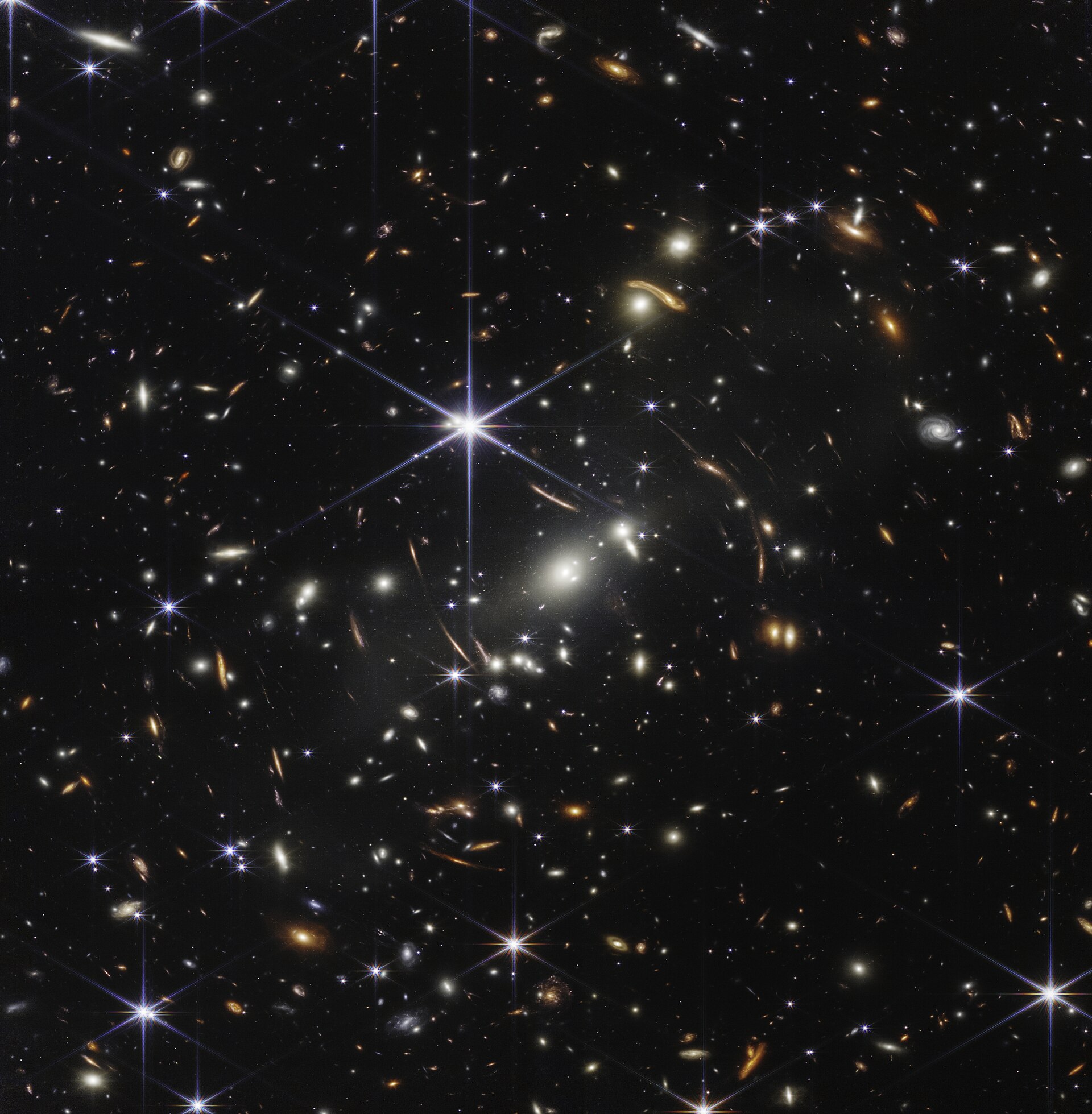
Multiple outlets, including Science Daily, Nature, a university press release from Penn State, The Debrief and several technology and news aggregators, report that new James Webb Space Telescope (JWST) observations have been interpreted as revealing a previously hidden population of faint, low-mass stars inside some very distant galaxies. The coverage frames the discovery as one that could raise the stellar mass estimates of early galaxies — Science Daily summarizes the claim by saying early galaxies may be as much as four times more massive than previously thought.
All of the available reports link the result to JWST imaging or survey data rather than to ground-based follow-up. Beyond that broad consensus — JWST data plus a team interpretation that fainter stars are more abundant than earlier models assumed — the supplied reporting diverges on technical detail and does not include the primary preprint or peer-reviewed paper that would list authors, instruments, filters, specific measured luminosities, redshifts, or the analysis code and data products.
What is supported by the sources, and what we cannot verify yet
Supported by the reporting: multiple news outlets independently report a team used JWST observations to infer a larger hidden population of small stars in some early galaxies. Several stories emphasize that this would increase inferred galaxy stellar masses relative to previous estimates, and Science Daily uses the specific phrasing that early galaxies "may be 4 times more massive than thought." Penn State’s release frames the finding similarly, and Nature ran a short item noting the possibility that distant galaxies can appear less massive than they actually are.
What we cannot verify from the supplied sources: the primary scientific record (preprint or journal article) that lists the lead authors, the exact telescope instrument(s) and filters (for example NIRCam or MIRI and which bands), the redshifts or distances of the galaxies analyzed, the raw images or extracted photometry/spectra, the numerical luminosities and mass estimates with error bars, or the code and reduction steps that produced the effect. Those are the specific items needed to reproduce or independently evaluate the claim and are not present in the supplied summaries.
How these analyses usually produce surprising mass estimates — and why that matters
Estimating a galaxy’s stellar mass from imaging relies on converting light into mass through models that assume how stars of different masses and ages contribute to the observed light (a stellar initial mass function and population synthesis). If a larger-than-expected population of faint, low-mass stars is present, those stars add mass without adding much light, raising the mass-to-light ratio and therefore the galaxy’s inferred stellar mass compared with prior estimates.
That conceptual pathway is why the reports emphasize a potential multiplicative increase in mass estimates: more low-luminosity stars shift the balance between light and mass. If confirmed, this would affect our picture of early galaxy growth, star-formation efficiency, and the inferred contribution of ordinary stars versus other components such as gas or black holes in the early universe.
Plausible alternative explanations raised in the coverage
The outlet summaries and Nature’s reporting acknowledge several alternative explanations that could mimic a hidden low-mass-star population. These include foreground gravitational lensing (magnifying faint background structure), data-reduction artifacts in JWST imaging, contamination from active galactic nuclei (AGNs) or compact star clusters, and unusual stellar populations or transient phenomena inside the targets. The supplied summaries do not present the team’s diagnostics ruling each alternative in or out, nor do they include independent technical critiques.
Because the underlying paper and data products are not in the available material, we cannot evaluate how thoroughly the team accounted for these possibilities. Independent commentary reported by Nature and other outlets is described generally, but neither specific external astronomers’ analyses nor detailed counter-evidence are included in the source set supplied for this article.
What changes this would bring — and why the uncertainty matters
If the mass increase headlines hold up — Science Daily’s phrasing cites up to a fourfold rise as a possible effect — that would have measurable consequences for models of early galaxy assembly. Larger stellar masses at fixed observed light would imply earlier or more efficient star formation, alter estimates of stellar feedback and chemical enrichment, and change the interpretation of early supermassive black-hole growth relative to host galaxies.
But those consequences depend on numbers that the current reporting does not provide: the exact redshifts (how far back in time these galaxies are), the luminosities and mass-to-light ratios measured, and the statistical or systematic uncertainties. Without the primary paper, the community cannot yet quantify how many galaxies, in which surveys, and at which epochs show this effect.
What to watch next
To move this from suggestive reporting to a settled scientific advance, readers should look for the team’s preprint or journal paper (which should list authors, instruments, filters, redshifts, measured luminosities and masses, and data products), independent reanalyses by other groups using the same JWST images, and commentary from at least two independent astronomers who publish the technical checks (for example demonstrating whether lensing, artifacts, AGNs, or population-model choices could explain the signal).
Freedom News will update this article when the preprint or peer-reviewed paper and the data products are publicly available. For now, multiple outlets report a potentially important JWST-based result, but the underlying scientific record required to evaluate and reproduce the claim is not present in the supplied sources.
Sources reviewed
- SSBCrack: JWST Reveals Larger Hidden Populations of Small Stars in Early Galaxies
- Science Daily: JWST finds early galaxies may be 4 times more massive than thought
- The Debrief: James Webb Space Telescope Discovery Reveals Hidden Stars Massively Expanding Early Galaxies
- Nature: Distant galaxies might be more massive than they appear
- The Pennsylvania State University: Hidden stars suggest that distant galaxies are more massive than they appear
- UA.NEWS: James Webb has detected more small stars in early galaxies than in modern ones