What was announced
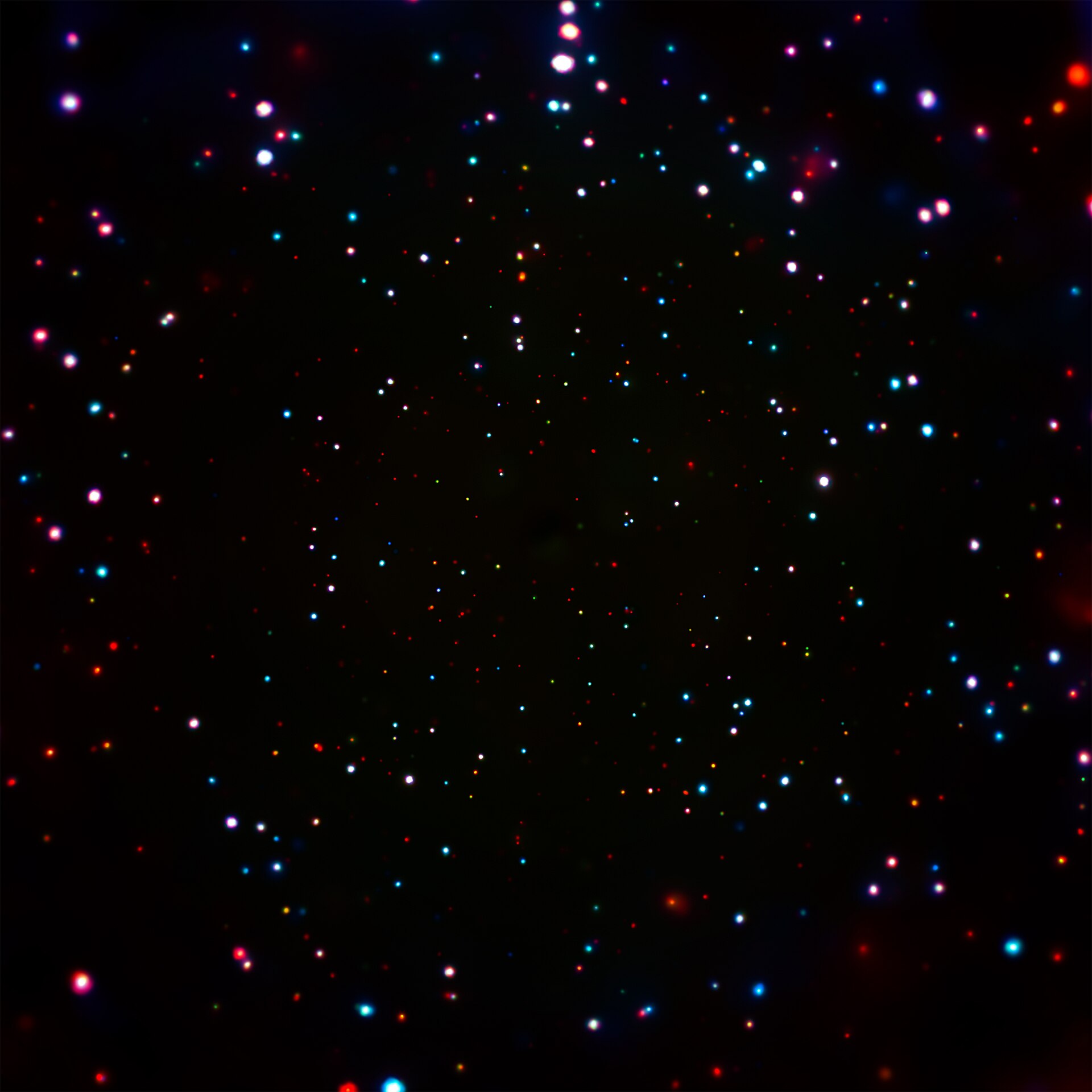
Multiple news outlets, including NASA’s own Chandra summary and national wire coverage, reported that researchers using the Chandra X‑ray Observatory have identified 84 X‑ray–bright objects hidden in other galaxies that the team says do not match previously recognized classes of X‑ray sources. Outlets described the finding as a possible new population or a new class of cosmic X‑ray emitters.
Coverage of the announcement was published over the same several days in early September 2026; the NASA Chandra item and related press coverage led national and international outlets to repeat the core claims and the characterization that these sources are “unlike anything seen before.” Sources uniformly identify Chandra as the instrument involved and list the count of 84 objects as the sample discussed in the initial reports.
What the reporting shows — and what it does not
The stories reviewed present a consistent headline: Chandra observations have revealed 84 X‑ray sources that differ from known source types. Several outlets framed the discovery as either a new class of cosmic objects or a previously missing population of X‑ray beacons.
However, the coverage that Freedom News reviewed did not include a link to a peer‑reviewed paper or a publicly archived preprint that presents the full analysis, nor did the articles reproduce detailed measurements. Crucial technical details that would let independent researchers assess the claim — for example, the energy spectra, timing properties, exact detection thresholds, background rejection methods, positional uncertainties, or multiwavelength counterpart searches — were not provided in the press coverage. That absence makes it impossible from these reports alone to verify how the team eliminated known explanations such as active galactic nuclei, ultraluminous X‑ray sources, transient tidal disruption events, or instrumental/systematic effects.
Why independent verification matters
When astronomers propose a new class of objects, the claim normally rests on published analyses showing how the sources differ from previously cataloged populations in specific measurable ways — for example, distinct spectral shapes, unusual variability patterns, or statistical clustering in host galaxies. Those technical diagnostics are what independent X‑ray astronomers use to test alternative explanations.
Because the initial coverage does not provide those diagnostics, several reasonable uncertainties remain. The sample size (84) is large enough to be interesting, but without public spectra and light curves, it is not possible to rule out that some or many of the detections are extreme examples of known source types, chance superpositions, background active galaxies misidentified in host galaxies, or statistical outliers created by selection effects in how the Chandra data were searched.
What alternative explanations reporting mentions
Some outlets that summarized the announcement suggested the discovery might represent a previously missed population of cosmic beacons, a framing that treats the finding as a gap in prior surveys rather than a wholly new physical phenomenon. Other coverage emphasized the more dramatic reading — that the objects behave differently from known classes. Neither framing is confirmed by the material reviewed here because the core measurements that support one interpretation over the other were not published alongside the initial press summaries.
Practical alternatives that astronomers commonly consider in such cases — including misclassification of known X‑ray source types, contamination from background sources, and instrumental or pipeline artifacts — cannot be evaluated from the press reports alone. That is why a full analysis in a preprint or peer‑reviewed paper, plus publicly accessible data products, is essential for independent assessment.
What to watch next
The next steps for verifying and understanding this announcement are straightforward: publication of the full analysis (typically a preprint on an open server and a peer‑reviewed paper) and release of the data products that allow other researchers to reproduce selection criteria and spectral/timing measurements. As of the reporting Freedom News reviewed, those materials were not linked from the press items.
Observers tracking this story should watch for a Chandra team preprint or journal article that lays out the search method, detection thresholds, spectral fits, variability tests, host‑galaxy associations, and statistical confidence levels. Independent X‑ray astronomers and survey teams will then be able to test whether the 84 sources occupy a distinct region of parameter space or whether they can be reconciled with known populations after accounting for selection effects.
Short timeline and context of the coverage
September 9, 2026 — NASA’s Chandra webpage and several wire services published summaries reporting the discovery of 84 unusual X‑ray sources based on Chandra observations. The press items were then picked up and amplified across science and general‑interest outlets over the following 48 hours.
September 9–11, 2026 — National and international outlets repeated the basic findings and characterized the objects as either a missing population of beacons or a potentially new class of X‑ray sources. No preprint or full technical appendix was linked in the articles reviewed by Freedom News during that period.
Bottom line for readers
The initial reporting points to an intriguing Chandra result: 84 X‑ray sources that researchers characterize as not matching known categories. That is newsworthy and worth careful follow‑up, but the absence of a linked preprint or full data release in the coverage means the community has not yet had the information it needs to independently confirm or refute the more dramatic interpretations.
Freedom News will update this item when the research team posts a preprint, releases the data products, or when independent teams publish follow‑up analyses that test alternative explanations.
Sources reviewed
- Space: Scientists discover mysterious new X-ray objects 'unlike any they have seen before'
- NASA Science (.gov): NASA’s Chandra Unveils Mysterious X-Ray Objects
- Discover SWNS: Scientists discover 84 mysterious space objects ‘unlike anything seen before’
- Newswise: NASA's Chandra Unveils Mysterious X-ray Objects | Newswise
- Metro.co.uk: 'Mysterious objects' discovered in space - and they're like nothing scientists have seen
- Gulf News: NASA finds 84 mysterious objects unlike anything seen before
- Field Museum: A fake spider at the tip of this snake’s tail helps it lure birds. Scientists got their first look inside the “spider.”
- iflscience.com: Newly Discovered Mysterious X-Rays Objects Are A Missing Population Of Cosmic Beacons
- dailygalaxy.com: NASA’s Chandra Found 84 Mysterious Objects Hiding in Other Galaxies, Scientists Have Never Seen Anything Like Them
- starlust.org: "Never encountered objects that act like this": NASA’s Chandra reveals a new class of cosmic objects