What’s happening now: launch preparations and media access
Multiple news outlets reported in late August 2026 that NASA’s Nancy Grace Roman Space Telescope — a major new astrophysics observatory — is integrated with a Falcon Heavy rocket and poised for launch. USA Today and several international outlets described the mission as potentially transforming how astronomers survey the sky. An official NASA SVS (Spaceflight Video Services) media notice published days before the scheduled liftoff invited interview requests and signaled that the agency was preparing public-facing media assets and briefings tied to the launch.
One technology outlet reported that the telescope was already aboard the Falcon Heavy and listed an August 30, 2026 launch date; that specific launch date was reported by that outlet and reflected the public coverage available at the time. Other outlets described the mission as being only days away from launch when NASA’s media notice went out, consistent with the late‑August reporting cycle.
What Roman is — and how it complements JWST
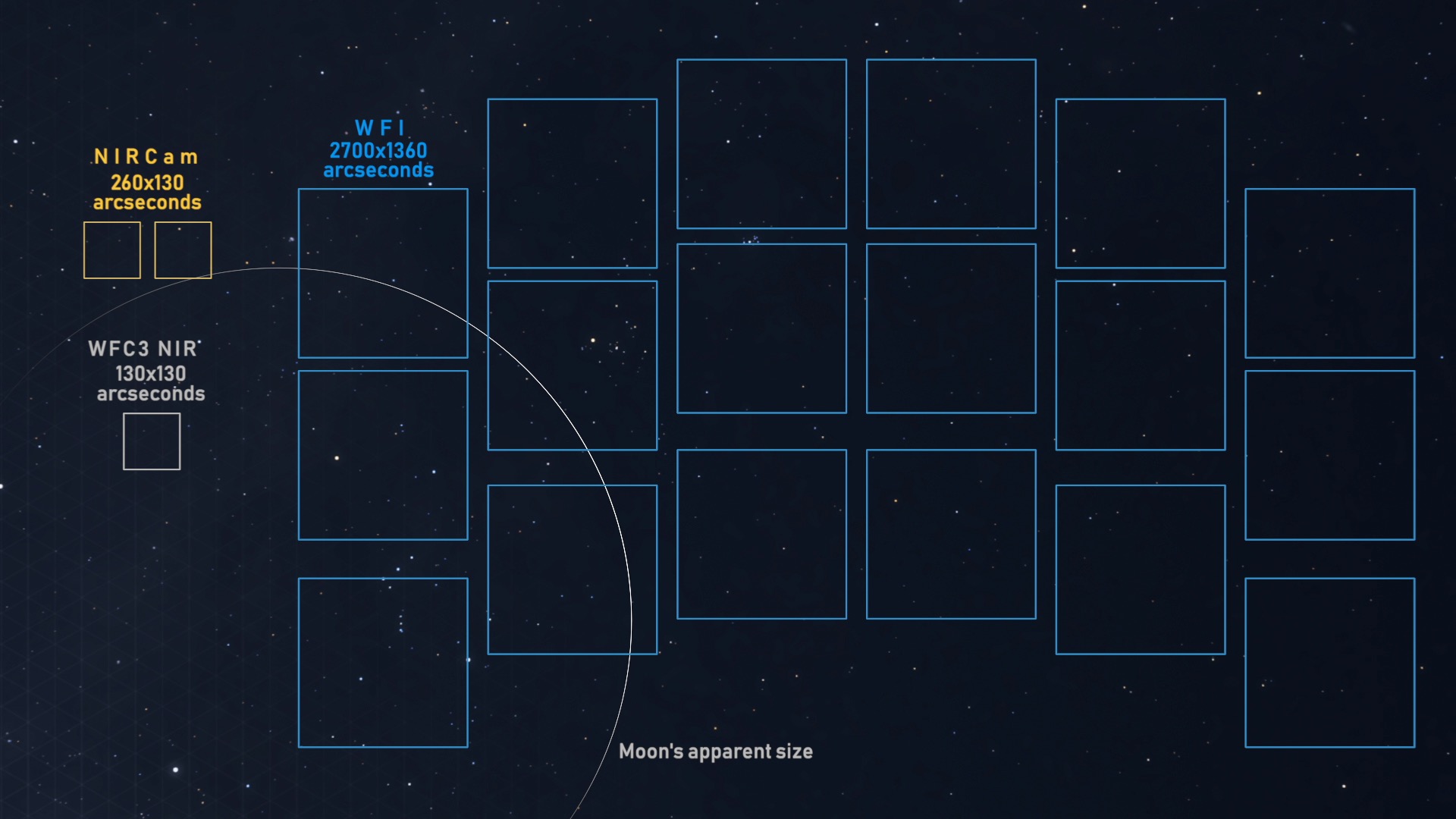
Across the coverage, writers described Roman as a very different kind of space observatory from the James Webb Space Telescope. Reporting in WIRED and other outlets emphasized that Roman’s design prioritizes a very large field of view and survey speed rather than the ultra-deep, narrow-field sensitivity that made JWST revolutionary. In plain terms: JWST is optimized to stare deeply at small patches of sky and reveal fine details in distant galaxies, while Roman is built to image vastly larger areas of sky much faster. Multiple outlets cast that pairing as complementary rather than competing.
News coverage and features framed Roman’s early science goals in broad but recurring themes: wide-area mapping to probe dark energy and cosmic structure, large-scale surveys that will find and precisely measure millions of galaxies, and targeted programs to search for and characterize exoplanets. One international report described the mission’s budget context and public profile, calling Roman a multibillion-dollar observatory focused on “the universe’s darkest secrets.” University and institutional reporting highlighted contributions from U.S. research partners to the mission’s science and data analysis pipeline.
Launch logistics, integration status and open questions
On the logistics front, at least one outlet reported the telescope as already onboard the Falcon Heavy and the mission being scheduled for late August 2026. NASA’s own media notice confirming interview opportunities and media briefings provides the strongest public signal that the agency was in the final pre-launch phase at the time of reporting.
Several practical specifics, however, remain unclear in the compiled public reporting. The available summary coverage does not identify which contractor or agency performed the final spacecraft encapsulation into the rocket fairing, and it does not publish a detailed, single-source technical manifest that lists the final integration milestones. Media interested in those precise engineering steps would need to consult NASA mission pages, the official press kit, or direct agency statements for confirmation.
Similarly, while NASA SVS’s media advisory indicates that high-resolution imagery and mission assets are being prepared for press use, the public summaries reviewed here do not reproduce the full technical data package (for example, the comprehensive instrument datasheets, detailed wavelength ranges, or the full observing survey schedules).
Early science: what Roman can do in its first months
Coverage by WIRED and other outlets painted a consistent picture of Roman’s early scientific payoffs: because it can cover large sky areas rapidly, Roman should open new statistical windows on cosmology and exoplanets. That includes the potential to tighten measurements of how the universe’s expansion has changed over time (a key probe of dark energy) and to discover large populations of exoplanets through microlensing and other survey techniques.
Observers also noted the mission’s expected legacy for the community. Roman’s wide surveys will supply candidate targets and contextual maps that narrower instruments like JWST can follow up with targeted, high-resolution spectroscopy and imaging. Several outlets described that relationship as a practical division of labor: Roman finds and maps; JWST and other observatories probe depth and detail.
What reporters and readers should watch next
Because the situation remained tightly time-sensitive in the coverage window, readers should look for formal NASA press releases and the mission’s official web pages for authoritative confirmations of launch date and time, final integration notices, and the full technical instrument specifications. NASA’s SVS media advisory signals the agency was prepared to distribute imagery and media access; journalists seeking high-resolution images or technical datasheets should use the agency’s official media channels.
For science-minded readers, the immediate post-launch period will be the most revealing. Multiple outlets said the telescope’s early operations will focus on commissioning its instruments and beginning the planned wide-area surveys. Those activities, and the first shared data products, will determine how quickly Roman begins delivering the statistical maps and catalogs that distinguish it from previous observatories.
Sources reviewed
- USA Today: NASA's Roman telescope could reveal the universe like never before
- NASA SVS (.gov): NASA Interview Opportunity: NASA’s Groundbreaking New Space Telescope Is Days Away From Launching!
- The Straits Times: NASA’s $5b ‘cosmic eye’ takes aim at the universe’s darkest secrets
- autoevolution: NASA’s Next Star Space Telescope Is Now Onboard the Falcon Heavy Rocket, Launch on August 30
- Ohio State News: Ohio State helps NASA mission lift off to scan the cosmos
- WIRED: NASA’s New Space Telescope Is Poised to Discover Hidden Facets of the Universe
- 매일경제: Humanity launches another powerful 'eye' into space that will reveal the secrets of the universe.NAS..
- Futura, le média qui explore le monde: This colossal new telescope could rewrite everything we know about the Universe