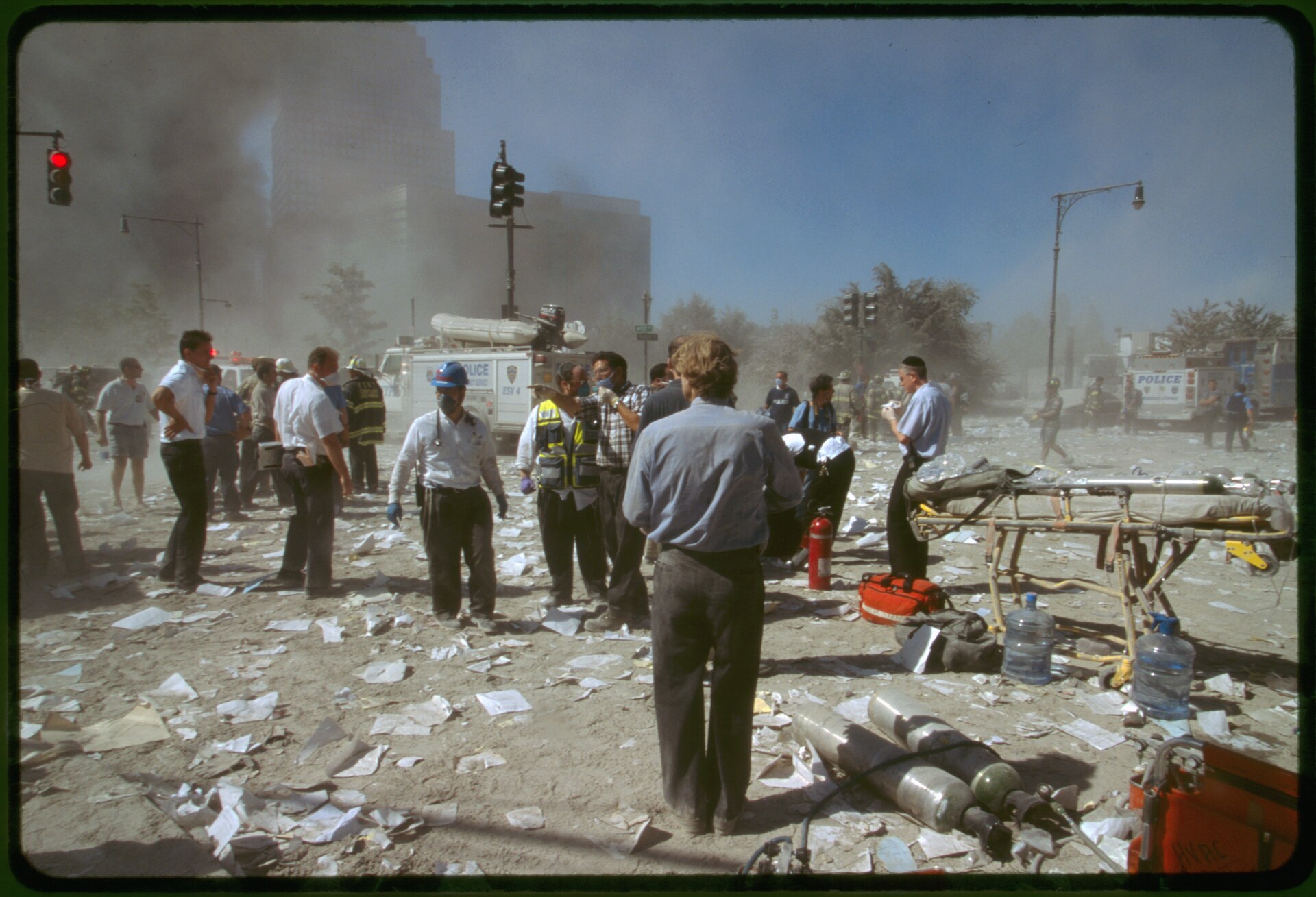
When the world went on the air
A Los Angeles Times commentary marking the 25th anniversary argues that television served as the principal lens through which most Americans experienced and tried to understand the attacks on Sept. 11, 2001. The piece frames broadcast and cable coverage as the immediate, continuous source of information and orientation for people watching at home, work, or in public spaces.
That claim is not presented here as a technical finding but as a cultural observation supported by contemporaneous reporting and the pattern of remembrance published this anniversary week. Several outlets ran first-person recollections and profiles that treated televised coverage as central to what people remember: how events were narrated in real time, how uncertainty was managed (or magnified), and how images and repeated live shots became the shared reference point for a dispersed population.
Voices from the day: survivors, rescuers and small-city witnesses
News outlets marking the 25th anniversary collected a range of personal memories that illustrate how television and live media shaped individual and communal memory. Yahoo published interviews with people such as a Toledo pilot and firefighters reflecting on the chaos and the decisions they made that day; those recollections were presented as personal accounts rather than independent reconstructions of events.
Local reporting compiled by presspubs also ran pieces of memory and reflection under the simple headline that memories remain, showing the variety of experience outside the major media markets. Those pieces underscore that televised coverage did not just relay facts; it supplied a running narrative that people returned to in later years when describing what they saw and felt.
Some survivor stories published around the anniversary are intensely vivid and traumatic. The Daily Mail ran a long-form survivor account describing extremely close calls and repeated life-threatening situations during the attacks; that report is a personal testimony and should be read as such. Personal testimony is essential to how a society remembers catastrophe, but individual recollections are not the same as independently verified event timelines.
Cultural ripple effects: programming choices and sensitivity
The media response to 9/11 included not only continuous news coverage but also decisions about entertainment programming and which images and stories were appropriate to show or run in the days and weeks that followed. As an example of this cultural recalibration, FandomWire noted that a U.S. broadcast of a Cowboy Bebop episode was pulled in the immediate aftermath of the attacks — a specific instance of the broader pattern of networks and programmers altering schedules or content out of sensitivity or caution.
Those programming choices are part of the media’s dual role in crisis: to inform the public while managing communal shock and commercial risks. How broadcasters balance those responsibilities affects what becomes part of the shared record and what is temporarily or permanently excised from the cultural stream.
Anniversary commentary and the larger debate
Not every anniversary piece treats television’s role purely as a neutral descriptive fact. Independent Australia published commentary that used the 25th anniversary as an occasion to revisit geopolitical consequences and the longer-term policy debates tied to the attacks, arguing that remembrance can reawaken contested national narratives. That column represents an interpretive frame rather than an empirical account of media coverage.
The mix of personal recollection, cultural reporting and opinion pieces this year highlights what anniversaries do: they compress lived memory, institutional response, artistic choices and political interpretation into a short moment of public attention. Television — live images, repeated replays and anchor-led explanation — figures in many of those threads because it shaped the immediate experience for large numbers of viewers.
Why the medium still matters for memory
Twenty-five years later, the shape of collective memory remains partly a function of how events were presented in the first hours and days. Television’s combination of motion, repeated images and continuous narration created durable reference points that people returned to when trying to explain what happened.
Readers should treat anniversary coverage with two habits in mind: distinguish personal testimony from independently corroborated timelines, and be aware that programming decisions made in moments of crisis also shape what the public remembers. The sources published around this anniversary — commentary, local memories, survivor testimony and specific programming examples — together illustrate why the question of who “guided” public understanding on that day still matters for how the nation remembers it now.
Sources reviewed
- Los Angeles Times: Commentary: Twenty-five years ago, television was the only guide through the horror and chaos of 9/11
- presspubs.com: 25 years later, memories remain
- Independent Australia: 9/11 25th Anniversary: Rousing the sleeping dragon
- FandomWire: 25 Years Ago, the U.S. Banned a Cowboy Bebop Episode From TV After 9/11 Attack
- Daily Mail: I was buried alive TWICE on 9/11: Firefighter heard screams fade to silence... before the second tower buried him again
- Yahoo: ‘Wherever you want’: Toledo pilot, firefighters remember the chaos and courage of 9/11, 25 years later