The United States has recorded more confirmed measles infections in 2026 than in all of 2025, public‑health tracking shows. The Centers for Disease Control and Prevention logged 2,318 confirmed cases as of Thursday, July 23, 2026, an agency update cited by multiple news organizations shows — passing last year’s total of 2,289 and reaching levels not seen in roughly 35 years. Independent trackers reported a comparable tally: Johns Hopkins University’s U.S. Measles Tracker showed 2,295 cases on July 22. Both the CDC and independent trackers say the pattern is driven by multiple outbreaks concentrated in a handful of states and by transmission in communities with low vaccination coverage, and public‑health officials view the surge as a clear signal of persistent immunity gaps.
How large is the increase — and how recent are the counts?
National tallies in mid‑ to late July show this year’s cumulative confirmed cases exceeding last year’s full‑year total. The CDC’s agency update referenced by news reports lists 2,318 confirmed cases as of Thursday, July 23, 2026; Johns Hopkins’ tracker recorded 2,295 cases as of July 22. By comparison, officials recorded 2,289 confirmed measles cases for all of 2025.
Surveillance data are provisional and subject to revision. The CDC’s publicly posted weekly tables and situation updates — which can lag some jurisdictional reports — provide the official line‑listing and cumulative counts used for national comparisons. Independent aggregators such as the Johns Hopkins U.S. Measles Tracker compile state and local announcements for more rapid situational awareness but may differ from final CDC totals by small amounts.
Where transmission is concentrated
Recent reporting identifies several states with large outbreaks that together account for a substantial share of national cases. Outbreaks that began in late 2025 and continued into 2026 — notably in parts of West Texas and South Carolina — along with large clusters reported in Utah and Arizona, have been repeatedly cited by health departments and national coverage.
Within states, cases have clustered in settings where vaccination coverage is below the threshold typically needed to prevent sustained spread — including close‑knit communities, some schools and settings with limited access to routine immunization. Public‑health investigators routinely use case investigations, contact tracing and genomic sequencing to link cases and identify whether outbreaks reflect local spread after importation or multiple independent introductions.
Why public‑health experts are concerned
Measles is among the most contagious vaccine‑preventable infections. When local measles‑mumps‑rubella (MMR) coverage falls below the roughly 95% level that supports herd immunity, a single importation can seed sizeable chains of transmission.
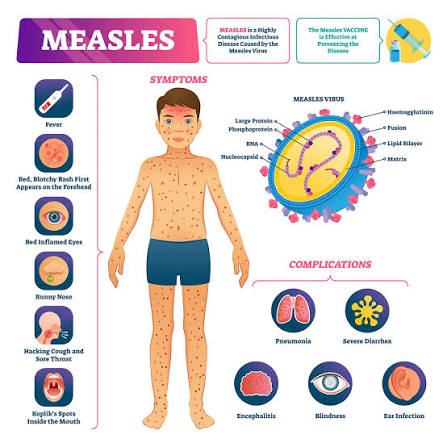
Experts say the recent rise largely reflects those immunity gaps plus higher global measles activity, which raises the chance that infected travelers will introduce the virus to U.S. communities. The public‑health implications go beyond the headline counts: large outbreaks increase hospitalizations and strain local health departments’ capacity for contact tracing and vaccination clinics. Even when deaths are rare, measles can cause serious complications — pneumonia, encephalitis and long‑term disability — particularly among very young children and people with weakened immune systems.
What officials are doing and what to watch next
State and local health departments are deploying standard outbreak tools: targeted vaccination clinics, school exclusion policies for exposed unvaccinated children, public messaging campaigns and, where appropriate, recommendations for clinicians to test and report suspected cases promptly. Jurisdictions with large clusters have also leaned more heavily on genomic sequencing to link cases and trace transmission pathways.
Key things to watch in coming weeks are updated CDC weekly surveillance releases, which should clarify official cumulative totals and confirmation status; state outbreak reports with age and vaccination‑status breakdowns; and announcements of expanded vaccination drives or school‑level exclusion orders. Laboratory genotyping and formal CDC situation updates will help distinguish whether current spread represents continued domestic chains linked to 2025 outbreaks or multiple new importations.
Sources reviewed
- AP News: There are already more US measles cases this year than in all of 2025
- New York Post: US hits most cases of ‘world’s most contagious disease’ in 35 years — and it’s only July
- Reuters: US measles cases outpace 2025 record seven months into this year
- CNN: US measles cases reach 35-year high, for second record-breaking year in a row
- WSJ: U.S. Measles Cases So Far This Year Hit a Three-Decade High
- NBC News: U.S. measles cases reach 35-year high in 2026, surpassing last year’s total
- breitbart.com: There are already more US measles cases this year than in all of 2025
- Centers for Disease Control and Prevention: Measles Cases and Outbreaks | Measles (Rubeola)
- Johns Hopkins University (IVAC/CSSE): U.S. Measles Tracker
- The Associated Press: There are already more US measles cases this year than in all of 2025
- Reuters (via news aggregation): U.S. measles cases outpace 2025 record seven months into this year
- CNN: U.S. measles cases reach 35‑year high, for second record‑breaking year in a row