What NASA reported
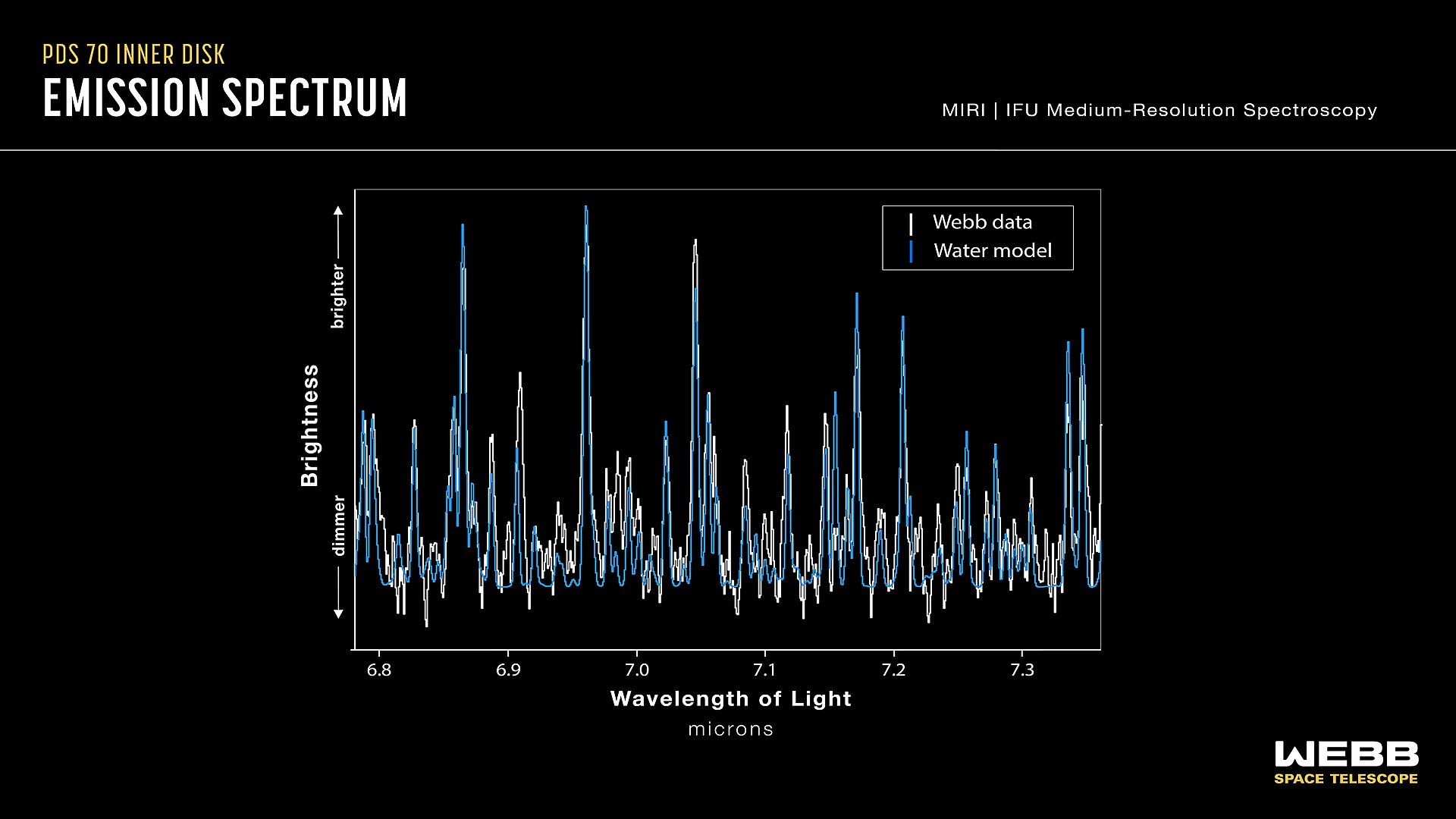
A science release from NASA on Sept. 11, 2026, says observations from the James Webb Space Telescope have detected water vapor in a disk region where rocky planets are expected to form. The agency framed the detection as appearing inside the disk’s inner zones rather than in the colder outer regions where water ice is usually found.
The release presents the finding as a new Webb result and treats it as a detection of water vapor in a planetary‑formation context. The supplied source summary does not include the technical observation log, instrument name, coordinates, spectra, or the peer‑reviewed paper that would normally accompany an important spectral detection, so the NASA release is the primary record available in this source set.
Independent reporting and a possible delivery mechanism
A separate outlet reported related evidence from studies of the young star system PDS 70, where sodium signals have been interpreted as possible tracers of small bodies or cometary material moving through the system. That reporting suggests a plausible pathway for water to reach inner, rocky zones: comets or volatile‑rich planetesimals migrating inward and releasing gas and dust.
Taken together, the two items in the available source set sketch a coherent narrative—direct water vapor detection by Webb and independent hints that comet‑like activity can transport volatiles inward—but they remain two linked reports, not a single, fully documented discovery paper connecting the spectra to a physical delivery mechanism.
Why the claim matters but remains provisional
If confirmed, water vapor inside the rocky planet‑forming zone changes how astronomers think about the timing and routes by which young terrestrial planets acquire their volatiles. Traditional models place much of the disk’s water budget in cold, outer regions as ice; getting water into the inner disk has commonly been explained by later delivery via impacts from icy bodies. A bona fide detection of gas‑phase water close to where rocky planets assemble would show that at least some volatiles are present in situ during the period of terrestrial planet formation.
That said, important technical and interpretive questions remain. The available sources do not include the underlying JWST spectra or fitted models, so critical diagnostics—precise line identifications, signal‑to‑noise measurements, and the spatial localization of the signal within the disk—cannot be independently checked here. Alternative explanations for spectral features (instrumental artifacts, foreground or background contamination, or emission from a different species) cannot be ruled out from the material provided.
What’s missing and what to watch next
A publishable, widely accepted astronomical detection of this kind is normally accompanied by a peer‑reviewed paper or a publicly posted preprint showing the spectra, the line fits, noise estimates, and the observation metadata (instrument mode, exposure date and duration, and pointing). The supplied sources do not include such a paper or those technical files.
Readers should watch for a preprint or journal article from the Webb team with the spectral plots and model fits, for a telescope observation log that lists the instrument used and the observation dates, and for independent commentary from other observers. Additional Webb or ground‑based follow‑ups that reproduce the signal, plus modeling that explains whether the water is local to the inner disk or delivered transiently by small bodies, will be decisive.
A cautious headline but a significant lead
Freedom News editors regard the NASA release as a credible, newsworthy development worth reporting immediately because it comes from the mission operator and concerns a high‑impact question about planet formation. At the same time, the absence of the underlying spectra and the peer‑review record in the supplied material means the scientific community will need to see the full data and analyses before treating the result as settled.
In short: Webb’s reported detection of water vapor inside a rocky planet‑forming zone is potentially important and plausibly connected to mechanisms such as inward migration of volatile‑rich bodies, but the claim remains provisional until the spectral evidence and methodological details are released and vetted.