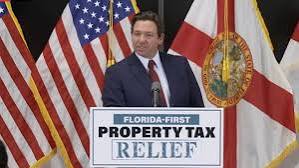
Florida's government is asking voters this fall to approve the single biggest change to local tax rules in a generation. In a two‑day special session on June 1–2, 2026, the Legislature approved a package that would sharply expand the homestead property tax exemption for most Floridians and add new restrictions on how counties and cities can use property‑tax revenue. That constitutional amendment will appear on the statewide ballot on November 3, 2026 — but the numbers and the consequences are still contested.
State economists and several independent analysts agree the effort will sharply cut local property‑tax revenue. How local governments, renters and businesses are affected depends on three things: whether voters actually approve the amendment, how future legislation interprets the new constitutional language, and how counties respond — by cutting services, raising other local taxes/fees, or seeking state help. Below: the text, the money math, who stands to gain or lose, the legal and political fights, and the key unknowns voters should track before they mark a ballot.
Quick Verdict
Evidence Snapshot
Official enrolled text filed after the special session and legislative roll calls are available from the Florida House/Senate and the Governor’s special‑session materials.
The enrolled HJR text specifies the effective dates and indexing language; the House enrolled text is the primary source for the amendment’s dollar thresholds and phase‑in schedule.
The enrolled text explicitly preserves school district levies from the non‑school homestead exemption expansion.
EDR/Revenue Estimating Conference workpapers and impact PDFs for CS/HJR 1F and related joint resolutions document modeled revenue reductions and the assumptions used to build them.
Analysts (Tax Foundation, Florida Policy Institute, Florida TaxWatch) agree on directional effects and replacement‑revenue tradeoffs but use different replacement scenarios (sales tax increases, local sales tax, fee changes) producing a range of hypothetical outcomes.
County executives and property appraisers issued local estimates; figures vary by methodology and are cited in local reporting and county memos.
What You'll Learn
- Exactly what the June 2026 legislative package changes and what it does not change (school levies excluded).
- How official and independent analyses estimate the fiscal impact statewide and for key counties.
- Where the debate is settled, where it is contested, and the most important open questions before Nov. 3, 2026.
- What local officials and voters should look for in TRIM notices, county budget decisions and court developments this summer and fall.
Key Takeaways
- The Legislature placed a constitutional amendment on the Nov. 3, 2026 ballot that would sharply expand the homestead exemption for non‑school property taxes and add new constitutional limits on local ad valorem spending.
- State modeling shows multi‑billion‑dollar revenue reductions for counties, cities and special districts; the size depends heavily on modeling choices about new residents and phase‑in.
- School district property taxes are protected in the enrolled text; the measure focuses on non‑school levies.
- The fiscal consequences will be highly uneven by county — some rural and low‑value communities could see near‑complete elimination of homestead tax bills, while dense metro counties face very large revenue loss.
- Important legal and implementation questions remain — especially how the constitutional 'use' restriction is interpreted and whether the Legislature or courts will change applying language or election timing.
Why This Matters
Property taxes are the primary revenue source for Florida local governments: they fund police, fire, roads, storm water control, pensions, constitutional officers, and — in many counties — a large share of core services. A statewide change of this scale would reshape local budgets, testing whether Tallahassee or local governments will decide priorities and how replacement revenue would be raised.
For ordinary Floridians the choice boils down to a tradeoff: large, immediate tax relief for many homeowners vs. the risk of service cuts, higher taxes on businesses and non‑homestead property, or big increases in consumption taxes to replace lost revenue. Voters need clear numbers from their county budgets to judge the local tradeoffs.
Timeline
- March 31, 2025Governor DeSantis proposes $1,000 property‑tax rebate plan (administration begins pushing broad property‑tax relief ideas).
- 2025House Select Committee on Property Taxes holds hearings and develops multiple proposals for 2026 consideration.
- June 1–2, 2026Florida Legislature convenes a special session called by the Governor; both chambers pass HJR 1‑F/CS/SJR 2‑F and companion implementation bills; vote totals recorded (House 75–26; Senate 30–9).
- June 16, 2026Enrolled joint resolution filed with the Secretary of State and scheduled as a constitutional amendment for the November 3, 2026 general election (requiring 60% approval).
- Jan 1, 2027If approved, the homestead exemption for non‑school levies would increase to $150,000 (first phase).
- Jan 1, 2028If approved, the homestead exemption for non‑school levies would increase to $250,000 (second phase) and indexing for inflation begins in 2029.
- Nov 3, 2026Election Day — voters will decide whether to ratify the constitutional amendment (60% yes required).
What the package actually changes
The Legislature’s June 2026 package contains two parallel components: a proposed constitutional amendment (enrolled as CS/HJR 1F) that must be approved by voters and an implementing statutory package (CS/SB 4‑F et al.). The amendment raises the non‑school homestead exemption to $150,000 on Jan. 1, 2027 and $250,000 on Jan. 1, 2028, with CPI indexing starting Jan. 1, 2029. It also imposes a new assessment‑growth cap for non‑homestead property — lowering the current 10% cap to 5% annually — and adds a constitutional clause restricting the use of ad valorem revenue to a limited list of categories.
Crucially, the enrolled text excludes school district levies from the expanded exemption; school funding is left intact. The amendment also includes a residency rule: people who become Florida residents after Dec. 31, 2026, would face a lower initial exemption for several years (a five‑year waiting/phase‑in period in the enrolled text), intended to prevent immediate use of the larger exemption by new arrivals.
The money math: official and independent estimates
The state’s Revenue Estimating Conference (EDR) produced multi‑scenario estimates. The modeling shows several billion dollars of lost non‑school ad valorem revenue during the phase‑in: roughly $4–5 billion in the first phase years and rising to $8–12+ billion annually in later years depending on modeling choices about migration and exemptions. The EDC/EDR workpapers document key assumptions — especially how many in‑migrant households will obtain homestead status and when.
Independent analysts (Tax Foundation, Florida TaxWatch, Florida Policy Institute, county appraisers and county budgets) have produced county‑level and statewide projections that overlap but vary by methodology. All agree the effects will be large and uneven — some counties project near‑total elimination of non‑school homestead tax bills for most homeowners, while larger metro counties estimate losses in the hundreds of millions of dollars.
Who gains and who pays
Gainers: owner‑occupants with homestead exemption status, especially those in counties with lower median home values; many homeowners will see a significantly lower non‑school tax bill or no non‑school bill at all after full phase‑in.
Losers or exposed parties: local governments that rely on ad valorem revenue will see budget gaps; renters could face indirect effects if local governments raise fees or other taxes to replace lost revenue; businesses and non‑homestead property owners could face higher effective rates if local governments shift tax burdens. Some small counties stand to benefit politically but still could face operational challenges if the state does not backfill lost revenue.
Legal and political fights to watch
Litigation is already under way in state court challenging the ballot summary and prompting questions about whether the language is misleading. Those lawsuits seek corrections or additional disclosures on the ballot content.
Politically, the governor signaled support for broad reform but has also said he will not formally campaign for the Legislature’s version. Local governments — county commissions, the Florida Association of Counties and the Florida League of Cities — have launched informational campaigns warning of the fiscal consequences. Expect heated county budget hearings this summer as local officials present TRIM notices and fiscal impact statements to residents.
What’s still unclear
How the new constitutional 'use' clause will be interpreted by courts and by local governments. The enrolled language lists seven categories of permissible use for ad valorem revenue; whether that list is read narrowly or broadly will determine whether discretionary programs such as cultural grants and economic‑development subsidies can be paid from property taxes.
Whether the Legislature will pass additional implementing laws after a November approval that change eligibility, carve‑outs, or create state backfill options — and whether any of that will be politically or legally contested.
Exactly how counties will respond: cutbacks, fee increases, restructured budgets, or requests for state assistance. The local policy response will drive the on‑the‑ground consequences for services Floridians use every day.
Where the Evidence Is Strongest
- The enrolled amendment will sharply reduce non‑school ad valorem revenue for counties, cities and special districts if voters approve it.
- School levies were protected in the enrolled text; school property tax revenue is not part of the expanded homestead exemption.
- The fiscal impact is large and geographically unequal — smaller, lower‑value counties will see a different distributional outcome from urban counties with higher property values.
Where the Evidence Is Mixed
- How large the recurring statewide revenue loss will be — estimates range by model and assumption (EDR midrange vs. higher independent tallies).
- Whether the new constitutional restriction on use of ad valorem funds will be interpreted to ban many discretionary local expenditures or only to require prioritization of core services.
- Whether approval would lead to higher local sales or other taxes, or to deep cuts in services; the set of policy responses is still contested.
- How many in‑migrant households will quickly claim homestead and how the five‑year residency rule will be enforced — EDR modeling makes explicit assumptions that materially affect totals.
Frequently Asked Questions
Is school funding protected by this amendment?
Yes. The enrolled amendment expressly excludes school district levies from the expanded homestead exemption; the change applies only to non‑school ad valorem levies.
When would the new exemptions start if voters approve?
The text sets Jan. 1, 2027 for the $150,000 exemption and Jan. 1, 2028 for the $250,000 exemption, with CPI indexing beginning in 2029.
Will the amendment immediately eliminate property taxes for most homeowners?
Not immediately for everyone. Many homesteads below the thresholds would see big reductions; state and county estimates show that a large share of homesteaded homeowners could pay zero in non‑school property taxes by the second phase, but the effect varies by county.
Do new residents get the same exemption?
No. The enrolled text applies a lower initial exemption for individuals who become Florida residents after Dec. 31, 2026, with a multi‑year phase‑in before they can access the larger exemption (the text establishes a five‑year lower exemption period subject to some local options).
How will local governments replace lost revenue?
Options include cutting expenditures, raising millage rates on remaining taxable property, increasing fees, seeking state assistance, or raising other taxes; each choice carries political and economic tradeoffs.
What must happen for the amendment to take effect?
First, it must be approved by 60% of Florida voters on Nov. 3, 2026; second, the constitutional language would take effect in the tax years specified (2027/2028) and implementing statutes would determine administrative details.
Questions Still Being Investigated
- Will the courts order changes to the ballot summary or explanatory language before Nov. 3, 2026?
- If voters approve, will the Legislature design replacement revenue measures or state backfill programs, and what will those cost?
- How will county-by-county budget actions play out in FY 2027 and FY 2028 — immediate cuts, hiring freezes, or fee increases?
- Will local governments pursue referenda or local measures to restore revenue? If so, how many and where?
- How precisely will property appraisers and tax collectors implement the five‑year residency and eligibility rules in practice?
Related Reading
- How Florida’s county budgets work and what TRIM notices tell you — Practical follow-up for readers to inspect their county’s budget, TRIM notice and to calculate local impacts this summer.
- The history of Florida’s Save Our Homes protections and portability rules — Contextual background on homestead protections that the current package builds on and modifies.
- Replacing property tax revenue: options and tradeoffs examined — A closer look at sales‑tax, fee and bond options and how each redistributes tax burdens across households and businesses.
The strongest available evidence supports the legislature passed a constitutional joint resolution (cs/hjr 1f) in a june 1–2, 2026 special session sending an amendment to the nov. 3, 2026 ballot and if approved, the amendment increases the homestead exemption for non‑school levies to $150,000 on jan. 1, 2027 and to $250,000 on jan. 1, 2028 (indexed after 2029). Other claims should be treated more cautiously where studies are mixed, limited, or dependent on specific conditions.
Sources Reviewed
Government & Public Records 5
- Executive Office of the Governor, State of Florida: Governor Ron DeSantis Announces Special Session on Property Tax Relief & Unveils 'Save Our Homes' Property Tax Elimination Proposal — Primary source for the Governor’s announcement and policy framing behind the special session.
- Florida Senate: CS/SB 4-F (2026F) 'Save our Homes' and related bill pages — Official legislative implementing bill page showing enrolled bill actions and cross‑references to the constitutional resolution.
- Florida House of Representatives (enrolled document): HJR 1-F Enrolled Text (House Joint Resolution 1-F) — Primary legal text of the constitutional amendment voters will decide; used to verify thresholds, dates, exclusions and residency rules.
- Office of Economic & Demographic Research (EDR) / Revenue Estimating Conference: Revenue Impact Analysis – CS/HJR 1F (Revenue Estimating Conference workpapers) — Nonpartisan modeling underpinning the official multi‑billion dollar fiscal estimates and key assumptions (migration, eligibility).
- Office of Economic & Demographic Research (EDR): Revenue Estimating Conference: 'Results of the Ad Valorem Estimating Conference' (sample HJR impact PDFs) — Additional EDR PDFs that document methodology and alternative HJR scenarios considered during 2026.
Reference & Other Sources 6
- Tax Foundation: Florida Property Tax Proposal: 2026 Details & Analysis — Independent, widely‑cited analysis of replacement‑revenue options and distributional risks.
- Florida TaxWatch: Florida TaxWatch: Analysis and commentary on the property tax amendment and legislation — State fiscal watchdog analysis and recommendations used to assess fiscal prudence and state process concerns.
- Florida Policy Institute: Florida Policy Institute: 'Florida Property Tax Amendment: Ballot Language Summary' — Provides distributional analysis, county impacts and policy framing from a policy‑research perspective.
- News Miami Dade: Property Taxes In Florida: DeSantis Puts Them On The Ballot On November 3, 2026 — Synthesizes local (Miami‑Dade) estimates, mayoral letters and county budget impact claims used in county‑level analysis.
- PolitiFact: Fact‑checking DeSantis: Would his plan exempt 60% of Florida homeowners from paying property taxes? — Independent fact check assessing claims made by the governor and campaign about coverage and percentages.
- LegalClarity: LegalClarity: 'Florida Tax Rebate: DeSantis’s Proposal and What Came Next' — Timeline and legal context, summary of Revenue Estimating Conference and county impacts.
Academic, Technical & Patent Sources 1
- Florida League of Cities: Fiscal Structure & Revenue Resilience of Florida Municipalities (PDF) — Prepares municipal fiscal impact modeling and helps explain intergovernmental resilience concerns.
Original Reporting & News 4
- Local10 (WPLG): Florida lawmakers pass plan to put property tax cuts on November ballot — Contemporary reporting on the special session votes and implementation changes.
- News4Jax (WJXT): Florida property tax overhaul heads to November ballot; homeowners hopeful, local leaders warn of budget impact — Local reporting summarizing legislative action and local leader reactions.
- WLRN: DeSantis won’t formally campaign for property tax amendment — Reports political signaling from the Governor and campaign posture.
- CBS Miami: Gov. DeSantis distances himself from property tax measure on the Florida ballot: 'It wasn't my proposal' — Reporting on the Governor’s public statements about campaigning.
Freedom News Verified means this draft was built from multiple relevant sources and an evidence review. It does not mean every claim is automatically proven, and publication still requires human editorial verification.