By Steven Tauriello
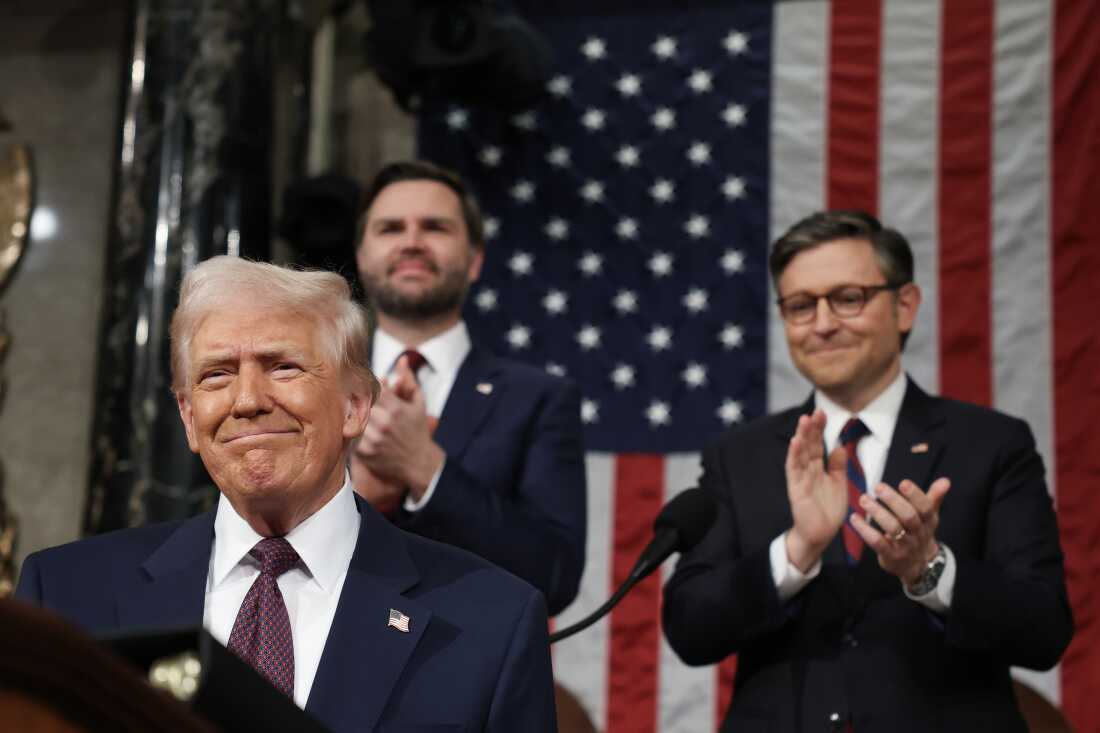
President Donald Trump is scheduled to address the nation from the White House in primetime, with election security, voting systems and public confidence in American elections expected to be among the central subjects of his remarks.
The White House has kept much of the address under wraps, leaving lawmakers, journalists and election officials waiting to learn whether the president will announce specific policy proposals, discuss voting-machine security, release information connected to previous election investigations or renew his call for Congress to enact national election standards.
Reuters reported that the speech would focus on election security ahead of the 2026 midterm elections. The Associated Press similarly reported that voting machines and election-integrity concerns were expected to receive significant attention. The exact contents of the speech, however, remained uncertain before the president took the podium.
The debate surrounding the address has already exposed a familiar divide. Some critics have framed nearly any renewed examination of the 2020 election as an attempt to revive disproven claims. Supporters of additional election safeguards argue that questions about election administration, voting technology and public confidence should not automatically be dismissed simply because they have become politically contentious.
Those are separate questions that should not be confused. A specific allegation about a particular election must be judged according to the evidence supporting it. The broader question of whether election procedures can be made more secure, transparent and trusted is a legitimate public-policy debate—one the country has been having for decades.
Election security and election confidence are not the same thing
An election can be administered according to existing law and still leave a significant portion of the public uncertain about how ballots were cast, verified and counted. That does not, by itself, prove that an election result was incorrect. It does demonstrate that election officials and lawmakers face a broader challenge extending beyond the final certified totals.
For a representative government to function, eligible citizens must be able to vote, lawful ballots must be counted accurately and the public must have confidence that the rules were enforced consistently. Election security therefore involves both the actual protection of the voting system and the ability of election officials to demonstrate that protection to voters.
Confidence cannot be restored by simply demanding that people trust the process. It must be earned through clear rules, transparent procedures, reliable records, meaningful audits and safeguards that ordinary voters can understand.
That does not mean every proposed restriction is necessary or justified. It means reforms should be evaluated according to whether they improve security without preventing eligible citizens from participating.
Public opinion: Americans largely agree on voter ID
Although election policy remains intensely divisive, national polling shows broad agreement on at least one major proposal: requiring voters to present government-issued photo identification before casting a ballot.
According to a 2024 Pew Research Center survey, 83% of Americans supported requiring all voters to show a government-issued photo ID to vote. Support crossed party lines, with 95% of Republicans and Republican-leaning independents and 69% of Democrats and Democratic-leaning independents favoring the requirement.
Those numbers matter because they show voter identification is not supported only by a narrow partisan constituency. Nearly seven in ten Democrats supported the policy in Pew's survey, even as Democratic leaders and civil-rights organizations continued to raise concerns about how certain voter-ID laws are implemented.
Gallup reported similar results in October 2024. Its national survey found that 84% of American adults favored requiring voters to provide photo identification at the time they vote. Gallup also found that 83% supported requiring proof of citizenship when a person registers to vote for the first time.
The polling does not establish that every voter-ID proposal is equally effective or fair. A law requiring an expensive or difficult-to-obtain document would raise different concerns than a system that automatically provides acceptable identification free of charge.
But the overall finding is difficult to ignore: requiring identification at the polls has overwhelming support nationally and substantial support among voters affiliated with both major political parties.
Americans support more than one type of election reform
The same polling also shows that Americans do not divide neatly into two camps—one favoring security and the other favoring access.
Pew found strong bipartisan support for maintaining paper-ballot backups for electronic voting machines. Majorities in both parties also supported providing a period of early in-person voting and making Election Day a national holiday.
Gallup found that 76% of Americans favored early voting. Majorities also supported automatic voter registration and sending absentee-ballot applications to eligible voters.
These findings suggest that the public is capable of supporting safeguards and voting access at the same time. Americans can favor photo identification while also supporting early in-person voting, free identification, paper records and additional opportunities for eligible citizens to cast their ballots.
Mail voting remains more politically divided. Pew found that 84% of Democrats supported allowing any voter to cast a ballot by mail, compared with 28% of Republicans. That gap is much larger than the divide over voter ID and demonstrates why sweeping national restrictions on mail voting would face far greater public and political resistance.
The Carter-Baker Commission: a bipartisan reform effort
The voter-ID debate did not begin with Donald Trump, the 2020 election or the modern Republican Party.
In 2005, former Democratic President Jimmy Carter and former Republican Secretary of State James A. Baker III co-chaired the bipartisan Commission on Federal Election Reform. The commission was organized following disputes surrounding the 2000 and 2004 presidential elections and was tasked with identifying ways to strengthen public confidence in the American electoral system.
Its final report, titled Building Confidence in U.S. Elections, issued 87 recommendations covering voter registration, identification, voting technology, absentee ballots, election administration, access and auditing.
The Carter-Baker Commission is sometimes incorrectly called the “Carter-Baker Act.” It was not an act of Congress and did not itself change federal law. It was a bipartisan commission whose recommendations were offered to federal and state policymakers.
Its work remains important because it demonstrates that many concerns now described as strictly Republican priorities were once examined by a commission led jointly by a Democratic former president and a Republican former secretary of state.
What Carter and Baker recommended on voter identification
The commission recommended a uniform voter-identification system based on a universally available identification card. It suggested adapting the federal REAL ID framework for voting purposes and providing a free photo identification card to eligible citizens who did not drive or otherwise possess qualifying identification.
The commission's approach contained two inseparable elements: voters should be required to identify themselves, and government should ensure that eligible voters can obtain the necessary identification without cost.
That second component is critical. A voter-identification requirement can command broad public support while still being implemented poorly. If identification is required, a defensible system should make acceptable ID free, reasonably accessible and available before Election Day.
The commission also contemplated a transitional process rather than an abrupt nationwide cutoff. Its objective was to establish a uniform system that increased confidence without unnecessarily preventing eligible voters from participating.
Supporters of voter ID argue that identification is already required for numerous routine activities and that confirming a voter's identity is a basic safeguard. Critics respond that in-person voter impersonation is uncommon and that strict documentation requirements can disproportionately burden elderly, low-income, disabled and rural voters.
The Carter-Baker framework attempted to address both concerns by pairing identification with universal access to a free qualifying card.
The commission's recommendations went far beyond ID
Reducing the Carter-Baker report to voter identification alone misses much of what the commission proposed.
It recommended a national system for connecting and maintaining state and local voter-registration lists. Accurate records, the commission argued, were necessary both to prevent improper voting and to ensure eligible citizens were not wrongly excluded.
It called for voter-verifiable paper records and stronger security for voting systems. That recommendation anticipated the continuing national concern over electronic machines, software, tabulation equipment and the ability to independently verify reported totals.
The commission also supported measures intended to improve voter access, including better information for voters, improved administration, accessible voting systems and more professional election management.
Its central approach was not simply to impose restrictions. It was to create a system built around accurate registration, reliable identification, accessible voting, auditable results and professional administration.
What the commission actually said about absentee ballots
The Carter-Baker report is frequently cited in arguments over mail voting because it stated that absentee ballots presented a significant potential source of fraud and coercion outside the controlled environment of a polling place.
That warning should not be erased from the historical record. Ballots completed outside a polling location can create different security concerns involving ballot custody, signature verification, third-party collection, undue influence and the handling of rejected or late-arriving ballots.
However, it would be inaccurate to claim that Jimmy Carter or the commission recommended abolishing all absentee or mail voting. The report proposed safeguards and additional study rather than a complete ban. Carter continued to support absentee and mail voting when administered with appropriate protections.
That distinction is important. Policymakers can recognize risks associated with mail ballots without concluding that military members, overseas citizens, disabled voters, elderly voters or other eligible citizens should lose access to absentee voting.
The serious policy question is not whether mail voting is automatically fraudulent or automatically beyond criticism. It is what procedures best protect ballot secrecy, custody, voter eligibility, signature review and timely counting while preserving lawful access.
Paper ballots and meaningful audits
One area with significant potential for bipartisan agreement is the use of voter-verifiable paper records.
A paper record provides something physical that can be examined independently of the software that recorded or tabulated the vote. That does not make an election system infallible, but it can make verification more understandable and more resilient.
Paper records are most valuable when combined with strong chain-of-custody rules, transparent reconciliation procedures and statistically meaningful post-election audits. Merely producing a paper ballot is not enough if officials cannot account for the number of ballots issued, cast, rejected, spoiled and counted.
Public observation also matters. Election rules should permit authorized observers from competing parties and qualified nonpartisan organizations to witness key stages of the process without interfering with voters or election workers.
The goal should be a process in which election officials do not merely announce that the result is accurate but can demonstrate how that conclusion was reached.
Same-day voting and a clearly defined Election Day
Supporters of a more traditional election model often argue that voting should occur primarily in person, with a clearly defined Election Day and limited exceptions for those who cannot reasonably appear at a polling location.
That approach may simplify certain aspects of ballot custody and reporting, but it also creates logistical challenges. Millions of Americans work long or irregular hours, care for family members, lack reliable transportation, serve overseas or face medical limitations.
A system centered on Election Day would therefore require sufficient polling locations, trained workers, reliable equipment and reasonable accommodations to prevent long lines and unnecessary disenfranchisement.
Congress could make Election Day a federal holiday for federal employees, but that alone would not guarantee private-sector workers time off. States and employers would still play a major role in determining whether voters could realistically reach the polls.
Early in-person voting offers a possible compromise. It preserves the controlled environment of an official voting location while giving eligible citizens more than one day to appear in person. Pew and Gallup polling indicate that early voting receives broad national support.
What Congress can—and cannot—change
The Constitution divides authority over elections between the states and the federal government.
States primarily administer elections, establish registration procedures, select voting equipment, operate polling places and count ballots. Local election offices conduct much of the day-to-day work.
Congress nevertheless has constitutional authority to regulate the “times, places and manner” of congressional elections, subject to constitutional limits and judicial review. Congress can also legislate to protect voting rights, fund election security and establish requirements connected to federal elections.
That means Congress could debate national standards involving voter identification, proof of citizenship, voter-registration databases, election-security funding, paper records, audits and mail-ballot procedures for federal contests.
But a president cannot unilaterally rewrite every state election law through a speech or executive order. Major nationwide changes would require legislation, funding, administrative planning and likely court review.
Any serious proposal must also account for how elections are actually administered. A national identification requirement, for example, would require clear definitions of acceptable documents, a free-ID program, procedures for voters whose documents contain errors and protections for eligible voters unable to satisfy the requirement before Election Day.
Security reforms must be specific
“Election integrity” is a broad phrase. Its meaning depends on the policies attached to it.
A useful reform proposal should answer practical questions:
- What problem is the policy intended to solve?
- What evidence shows the problem exists at a meaningful scale?
- How would the new rule prevent or detect it?
- What would implementation cost?
- How would eligible voters obtain any required documents?
- What process would correct errors before a lawful vote is rejected?
- How would officials audit compliance and report the results publicly?
Without those details, election reform can become little more than a slogan. With them, the country can compare competing proposals according to measurable standards rather than partisan assumptions.
Critics raise legitimate access concerns
Civil-rights organizations have long argued that strict identification and documentation requirements can burden eligible voters who do not have driver's licenses, ready access to government offices, matching records or the ability to pay document-replacement fees.
The American Civil Liberties Union criticized portions of the Carter-Baker recommendations in 2005, warning that photo-ID requirements and interstate databases could affect low-income and elderly voters and create privacy concerns.
The Brennan Center for Justice similarly argued that portions of the commission's report relied too heavily on anecdotal evidence and that some recommendations could restrict eligible voters without producing sufficient security benefits.
Those objections do not erase the overwhelming polling support for voter identification, but they do shape how an ID system should be designed.
A program intended to increase confidence should not make identification technically free but practically inaccessible. Mobile enrollment programs, extended office hours, online pre-application, transportation assistance and clear procedures for correcting government-record errors could help reduce that risk.
Supporters argue visible safeguards strengthen trust
Supporters of stronger election rules argue that government routinely requires identity verification for activities carrying far less civic importance than voting. From their perspective, presenting identification is a simple and visible safeguard that reassures voters the person casting a ballot is the registered individual entitled to cast it.
They also argue that election policies should prevent vulnerabilities before those vulnerabilities result in a proven large-scale failure. Security systems in banking, aviation, computing and national defense are generally evaluated according to risks and potential weaknesses—not only documented catastrophes.
That principle does not justify every proposed restriction. It does support regularly reviewing election procedures, technology, databases and ballot-custody rules rather than treating the existing system as beyond improvement.
What to watch during Trump's address
The most important question surrounding the president's speech is whether he presents specific, verifiable evidence and clearly defined policy proposals.
If Trump discusses foreign interference or voting-machine vulnerabilities, the public should examine the underlying intelligence, technical assessments and limitations of that evidence. An adversary's intention to interfere is not necessarily proof that votes were altered, and a theoretical vulnerability is not automatically evidence that it was exploited.
If the president proposes voter-identification or citizenship-verification requirements, the details will matter. Voters should look for provisions ensuring that identification is free, accessible and available to every eligible citizen.
If he calls for restrictions on absentee or mail voting, the proposal should explain how it would accommodate military personnel, overseas voters, voters with medical limitations and other citizens who cannot reasonably vote in person.
If he discusses voting machines, the strongest reforms would likely include paper records, transparent certification, physical security, public testing and meaningful post-election audits rather than relying on confidence in any single manufacturer or software system.
Freedom News takeaway
Election confidence should not be treated as a partisan concern. Republicans should want Democratic voters to trust elections won by Republicans, and Democrats should want Republican voters to trust elections won by Democrats.
That confidence cannot be manufactured by dismissing every concern as a conspiracy, nor can it be built by repeating allegations without evidence. It requires rules that are secure, accessible, transparent and capable of independent verification.
The polling shows that Americans already agree on more than the political debate often suggests. Eighty-three percent supported government-issued photo identification in Pew's survey, including 95% of Republicans and 69% of Democrats. Gallup found 84% support for photo ID and 83% support for proof of citizenship when registering for the first time.
The bipartisan Carter-Baker Commission offered a useful model nearly two decades ago: universally available voter identification, accurate registration lists, strong ballot safeguards, voter access, professional election administration and auditable paper records.
Not every recommendation from 2005 should be adopted unchanged in 2026. Technology, voting practices and election law have evolved. But the commission's broader principle remains relevant: confidence is strongest when security and access are treated as complementary responsibilities rather than opposing goals.
President Trump's address may reopen one of the most contentious debates in American politics. The value of that debate will depend on whether it produces evidence, workable proposals and enforceable standards—or simply another round of partisan accusations.
Americans deserve an election system in which every eligible voter can participate, every lawful ballot is counted and every result can be transparently verified. That should be the standard against which every proposal from either party is measured.
Polling and historical sources
- Pew Research Center: Bipartisan support for early in-person voting, voter ID and an Election Day national holiday
- Gallup: Americans endorse both early voting and voter verification
- Baker Institute: The Carter-Baker Commission and its election-reform recommendations
- Congressional Record: Carter-Baker voter-identification recommendations
- Congress.gov: Discussion of the Carter-Baker Commission's proposed national voter-identification standard
- ACLU: Civil-rights and voter-access concerns regarding Carter-Baker recommendations
- Brennan Center: Response to the 2005 Commission on Federal Election Reform