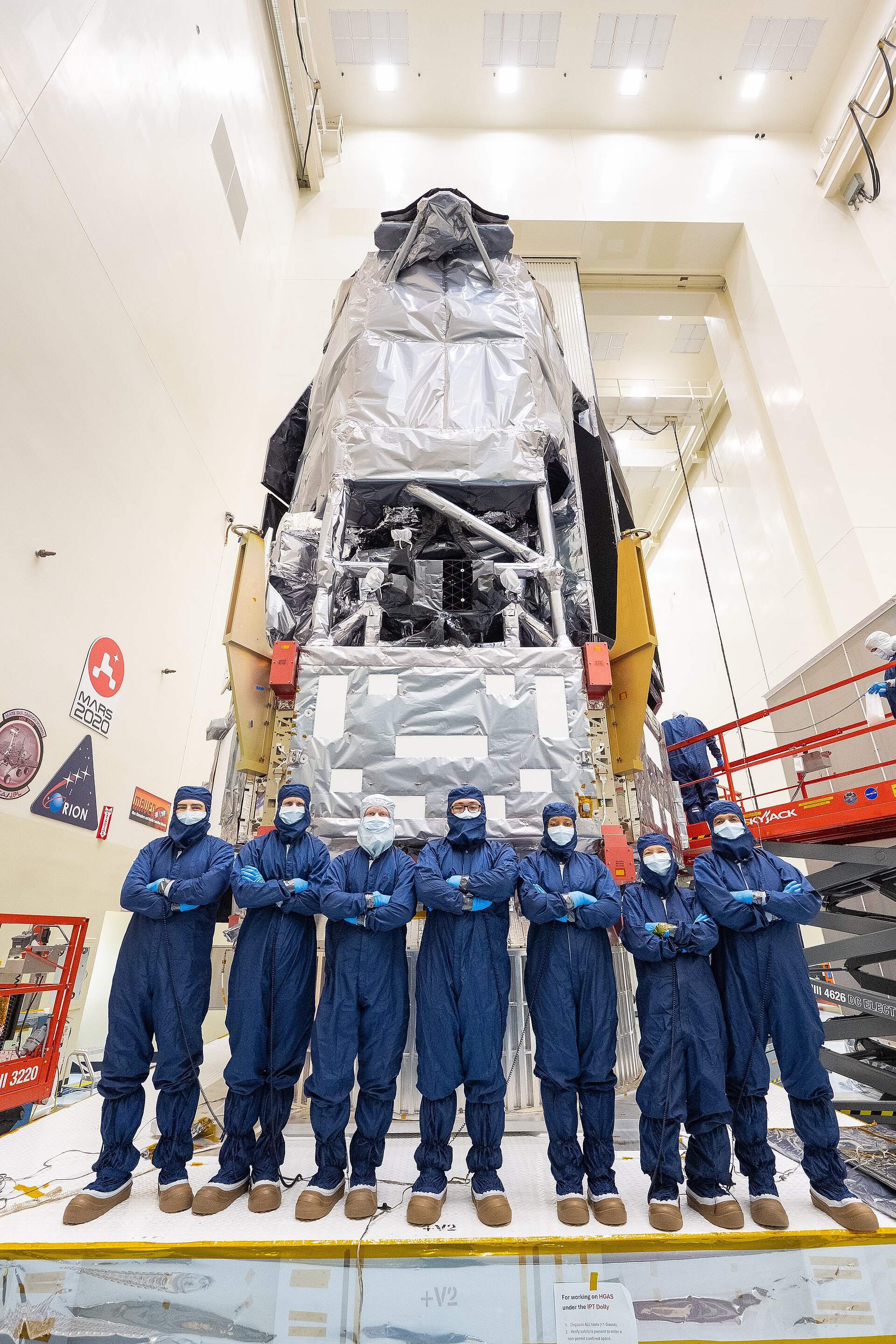
What’s happening this weekend
Multiple outlets report that NASA’s Nancy Grace Roman Space Telescope is slated to leave Earth this weekend. Coverage reviewed by Freedom News cites a Sunday launch window reported by several outlets and a detailed schedule published by news services preparing for the mission’s lift-off this weekend.
Independent reporting emphasizes the mission’s purpose: Roman is built to survey large areas of the sky to study dark energy and dark matter, and to carry out large-scale exoplanet searches. Local public radio and national outlets highlighted the mission’s science goals and the broad view the telescope will bring to cosmology and planetary science.
How long until you’ll see Roman’s first photos?
You will not see mission-quality, science-ready Roman images immediately after launch. Reporters covering the mission explain that a new space telescope must first reach its operational orbit, deploy its hardware, power up instruments and carry out an extended commissioning and calibration campaign before releasing science-calibrated images.
Outlets covering the mission describe that process as taking from several weeks to multiple months. In other words, the first public images will most likely be engineering and calibration frames—used by mission teams to tune detectors, verify pointing and correct instrument artifacts—followed later by the first “first-look” science images once calibration is complete.
The exact schedule is set by the spacecraft team and can shift if engineers find hardware or software issues needing extra time. Freedom News relied on multiple reports to summarize the expected sequence; readers should watch for an official NASA update or a mission press release for the precise timing of the first public image releases.
What the first images will actually show — and what they will not
Roman carries a wide-field imager built to cover far more sky in a single exposure than previous flagship telescopes. Reporting notes that the telescope uses a mirror the same size as Hubble’s but a field of view roughly 100 times larger, enabling very large surveys rather than ultra-deep, narrow-pointing images. That makes Roman particularly powerful for mapping large structures in the universe and finding exoplanets through microlensing surveys and other wide-area methods.
Because of that design trade-off, the telescope’s first public images are unlikely to resemble the ultra-detailed close-ups produced by the James Webb Space Telescope. Early photos are more likely to be broad star fields, dense galaxy fields, or calibration mosaics that demonstrate how the instrument images large patches of sky. Those images will be valuable for survey science but will look different — and usually less ‘detail-rich’ in the small-scale sense — than deep single-pointing images from JWST.
News coverage also emphasizes that the mission’s major scientific returns, such as large dark-energy and dark-matter surveys or any major exoplanet harvest, will accumulate over the mission’s observing campaigns and data releases rather than as a single dramatic photo drop. Some outlets note projections that Roman’s surveying power could enable the discovery of very large numbers of new exoplanets and vastly improve statistical measures of the large-scale cosmos, but those scientific returns will follow years of survey operations and analysis.
Why Roman matters and what to watch next
Coverage from national and specialist outlets frames Roman as complementary to Hubble and JWST: it sacrifices single-target depth for a much wider view, enabling statistical and mapping projects that the narrower-field observatories cannot match. Reporters highlight the mission’s potential to transform fields that rely on large samples, including studies of dark energy, dark matter, galaxy evolution and exoplanet demographics.
Short-term: watch for official status updates from NASA and the launch provider in the hours and days after liftoff. Those updates will confirm whether deployment and early checkouts proceed on schedule. Mid-term: expect engineering images and calibration products first, followed later by published ‘first-look’ or commissioning images once the team has confidence in the instrument calibration. Longer-term: science survey data will be released in stages as teams process and validate larger datasets.
Readers who want live confirmation should follow NASA’s mission pages and the agency’s social channels for the formal first-image releases. Independent coverage from space reporters and local outlets will provide context as the mission moves from deployment into its scientific program.
The uncertainties that matter
Launch schedules can change at short notice. Multiple outlets reported a weekend launch window; the exact day and time can still move if the provider or NASA calls a delay.
Commissioning is inherently contingent on how well hardware and software perform in orbit. The timespan between launch and the first science-ready images is driven by technical verification; the mission team may extend commissioning if problems are found.
Finally, major scientific discoveries — for example, large numbers of new exoplanets or revised dark-energy constraints — will arrive after surveys and analysis, not as an immediate headline photo. Early images will mainly show that Roman’s wide-field systems are working as intended.
Sources reviewed
- Live Science: NASA's Nancy Grace Roman Space Telescope is set to launch this weekend. When will we see its first photos?
- Houston Public Media: NASA to launch its powerful Roman telescope on Sunday, studying dark matter and dark energy
- Houston Chronicle: NASA’s $4.3B space telescope could find 100,000 new planets
- ABC News & Headlines – Australian Broadcasting Corporation: It was a spy satellite, now NASA's new telescope is set to head into space
- Palm Beach Daily News: Telescope launching in Florida could change our understanding of the cosmos
- The Debrief: NASA’s Roman Space Telescope Could Soon Unravel the Greatest Mysteries of the Cosmos—Here’s What to Expect
- NBC News: The universe, unlocked: NASA to launch a space telescope that could transform our view of the cosmos
- Sarasota Herald-Tribune: A Space Coast launch could help answer whether we're alone in universe
- ScienceBlog.com: NASA's Roman telescope launches on Sunday August 30 with the same size mirror as Hubble, but it takes in roughly 100 times more sky at once — and it is arriving eight months ahead of its committed date
- Space: NASA's Roman Space Telescope will reveal the universe in a way the JWST and Hubble cannot