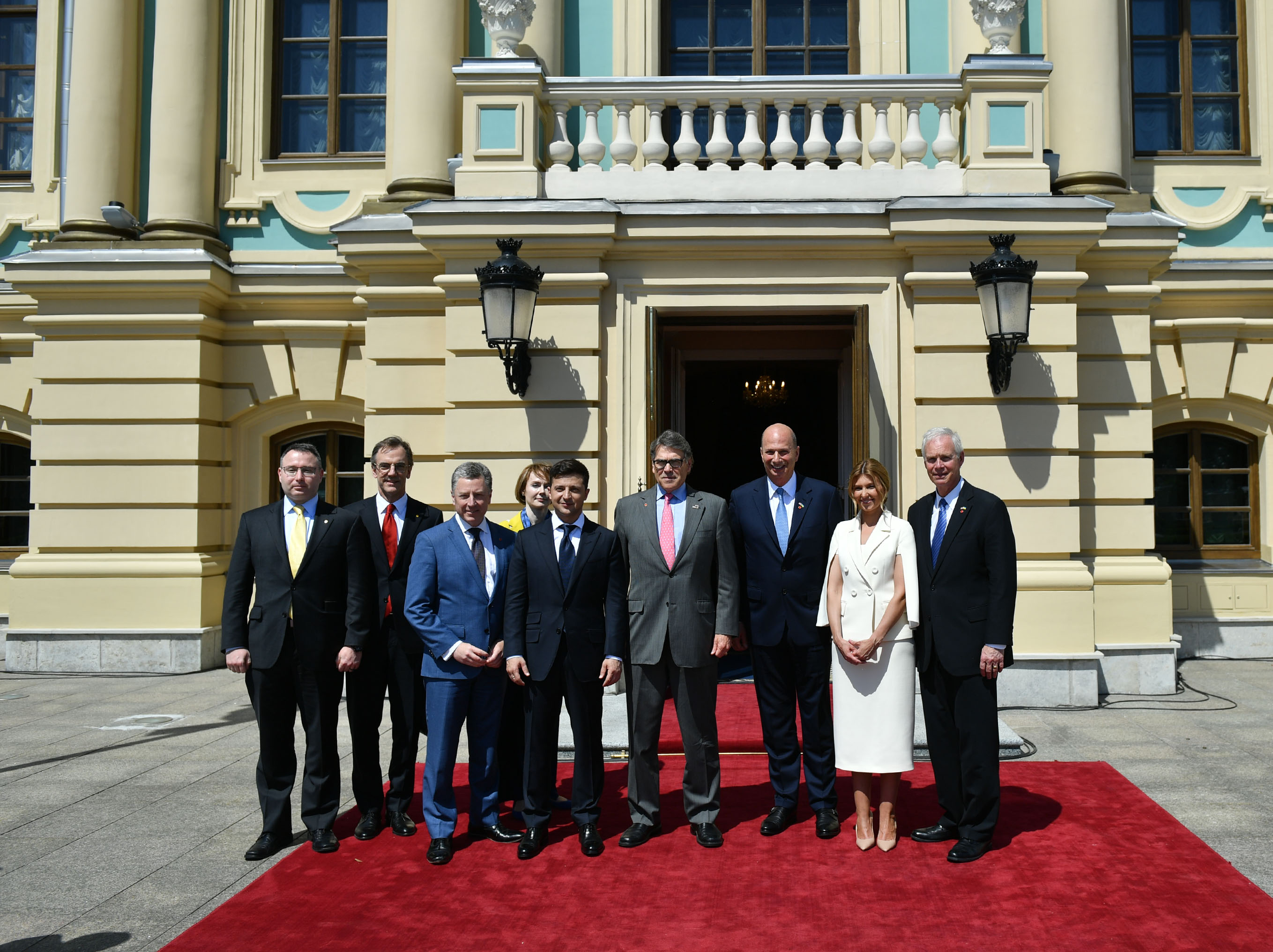
Alexander Vindman's loss in Florida's Democratic U.S. Senate primary was more than a routine election defeat. It was a rejection of a certain kind of political figure: the national-security insider turned media personality, the anti-Trump resistance celebrity, the candidate backed by massive money but unable to connect with voters on the ground.
Florida state Rep. Angie Nixon defeated Vindman in the August 18 Democratic primary for the special U.S. Senate election. Ballotpedia's results show Nixon winning 55.9% with 690,172 votes, while Vindman received 44.1% with 543,688 votes.
| Candidate | Vote share | Votes | Result |
|---|---|---|---|
| Angie Nixon | 55.9% | 690,172 | Won Democratic primary |
| Alex Vindman | 44.1% | 543,688 | Lost Democratic primary |
That margin is striking because Vindman entered the race with national name recognition, a famous impeachment resume and a massive fundraising advantage. Federal Election Commission data shows Vindman's campaign reported $16.27 million in total receipts, $16.19 million in total contributions and $9.02 million in total disbursements through July 29, 2026. Nixon, by contrast, raised just under $1 million according to post-election reporting.
Campaign Fundraising Gap
The money gap is the first reason this race deserves a closer look. Vindman did not lose because he was ignored. He did not lose because donors were unaware of him. He lost after raising more than sixteen times what Nixon reportedly raised and after spending millions trying to convert his national profile into votes.
| Campaign measure | Vindman | Nixon | What it suggests |
|---|---|---|---|
| Total receipts | $16.27 million | Under $1 million reported | Vindman had a massive donor-class advantage |
| Votes received | 543,688 | 690,172 | Nixon won despite the funding gap |
| Receipts per vote | About $29.93 | Less than $1.45 | Vindman's money converted poorly into support |
| Disbursements per vote | About $16.59 | Not available from the same final filing snapshot | Even heavy spending did not close the gap |
That is the kind of result that should embarrass the consultants and national donors who thought a Washington-made candidate could be dropped into Florida and packaged as inevitable.
The Polling Picture
Public polling before the primary focused mostly on hypothetical general-election matchups against Republican Sen. Ashley Moody, not on the Democratic primary between Vindman and Nixon. That matters because there does not appear to have been a clear, widely available public primary poll showing Nixon ahead before Election Day.
The general-election polling showed both Democrats trailing Moody, but Vindman was often treated as the more electable establishment option.
| Pollster | Dates | Sample | Moody vs. Vindman | Moody vs. Nixon |
|---|---|---|---|---|
| University of North Florida | Feb. 21-Mar. 2, 2026 | 786 LV | Moody 45%, Vindman 38% | Moody 46%, Nixon 38% |
| Emerson College | Mar. 29-31, 2026 | 1,125 LV | Moody 46%, Vindman 38% | Moody 47%, Nixon 36% |
| Stetson University | Mar. 15-Apr. 13, 2026 | 848 LV | Moody 49%, Vindman 42% | Moody 51%, Nixon 38% |
Additional polling listed Moody ahead of Vindman by smaller margins in some surveys: MDW had Moody at 43% and Vindman at 42%, while Public Policy Polling had Moody at 43% and Vindman at 40%.
A July University of North Florida analysis also suggested Nixon could perform slightly better than Vindman with Black voters. Florida Politics reported that Nixon led among Black voters 78% to 8% against Moody, while Vindman led that group 73% to 8% in his hypothetical matchup.
Exit-poll note: Freedom News Media did not find a formal statewide exit poll for the Democratic Senate primary. What is publicly available is post-election voter and county-level analysis. The Washington Post reported that Nixon's win was powered by voters in some of Florida's lowest-income and least-college-educated counties, as well as counties with large Black populations.
That voter pattern undercuts the whole Vindman pitch. His campaign looked strongest on paper: big donors, national-security credentials, cable-news familiarity and a name already known to anti-Trump Democrats. Nixon's support looked more local and more ideological. She ran as an unapologetic progressive and leaned into the voters and activist networks that actually decide Democratic primaries.
That does not make Nixon a good general-election candidate, and it certainly does not make her a conservative ally. But it does show that Democratic voters in Florida did not simply follow the money or the media script.
The Impeachment Brand
Vindman became nationally famous because of President Trump's first impeachment. As a National Security Council official, he listened to Trump's July 25, 2019 call with Ukrainian President Volodymyr Zelensky and reported concerns internally. House materials identify him as the NSC Director for European Affairs and a key witness in the impeachment inquiry.
Supporters call that courage. Critics see it differently: a bureaucratic insider helped turn a presidential foreign-policy call into a national impeachment fight that consumed Congress, the media and the country.
That distinction matters. Vindman did not simply run as a Democrat with military experience. His entire political identity was wrapped around Trump, Ukraine, impeachment and the national-security establishment.
It is worth being precise here. Vindman did not impeach Donald Trump by himself. Congress did that. House Democrats made the political decision. The media amplified it. The Senate trial followed. But Vindman's role was central because he helped create the factual path that Democrats used to turn the Ukraine call into an impeachment case.
From a conservative perspective, that is exactly the problem. The controversy began with an internal executive-branch phone call involving foreign policy. Vindman listened to that call as a national-security official and raised objections through government channels. His defenders say that was proper whistleblower-adjacent conduct. His critics see a member of the bureaucracy taking a disagreement over presidential foreign policy and feeding a process that helped paralyze the country for months.
The public cost was real. Congress spent its time on impeachment. News coverage revolved around impeachment. The country was pushed into another institutional crisis. Then, after all of that, Vindman tried to use the fame created by that episode as the foundation for a political career.
That is why his loss matters. Voters were not merely judging a resume. They were judging what that resume represented.
The Ukraine Question
Vindman's ties to Ukraine are extensive. He was born in Kyiv, speaks Ukrainian and Russian, worked on Ukraine policy at the NSC and was part of the U.S. delegation to Zelensky's 2019 inauguration. None of that is corruption by itself.
The issue is the pattern that followed.
After becoming famous through a Ukraine-related impeachment fight, Vindman remained a major public advocate for U.S. support to Ukraine. He also became linked to a Ukraine-focused defense-support project called Trident Support or Trident International. Fox News reported that Vindman was accused of pitching Ukraine defense contracts through Trident International LLC, where he was described as CEO, including a reported $12 million weapons maintenance and repair logistics project.
The Washington Post later reported that the Pentagon urged the House to investigate whether Eugene Vindman and Alex Vindman improperly consulted for firms pursuing Ukraine contracts without required approval. The same report noted that the Pentagon letter did not explicitly allege the Vindmans received money from Ukraine, and Eugene Vindman denied wrongdoing, saying revenue came from American firms and that they followed the law.
That is the distinction Freedom News Media should keep clear: this is not a courtroom verdict. It is a political judgment. Voters are allowed to look at a candidate's career path and ask whether the incentives line up with the public interest.
Vindman was not just another veteran running for office. He was a Ukraine-policy official who became famous through a Ukraine-related impeachment fight, then became one of the loudest public voices for continued U.S. support to Ukraine, then faced questions about Ukraine-related private-sector activity. Even if every dollar was legal and every form was filed correctly, voters can still decide that this is exactly the kind of revolving-door political figure they do not want elevated into the Senate.
That is especially true in Florida, where voters have repeatedly rejected attempts to import national political narratives and make them the center of state politics. Vindman's campaign was almost impossible to separate from Washington. Nixon, for all of her progressive politics, did not carry that same national-security establishment baggage.
Why His Loss Was Good
Nixon is far to the left. Conservatives should not mistake her victory for a good policy outcome. But Vindman losing was still good because it exposed something important.
A candidate with national fame, establishment support, impeachment credentials and more than $16 million still could not beat a progressive state lawmaker who had a fraction of his money.
That says voters were not buying the pitch.
Vindman's campaign looked like the old Democratic establishment trying to parachute a national figure into Florida. Nixon's campaign, whether one agrees with her politics or not, looked more organic. She campaigned as a grassroots progressive, leaned into affordability, social media, labor support, Black churches and activist networks, and defeated the donor-backed safe candidate.
For conservatives, that creates an unusual but important point. Nixon's policy agenda is not good for Florida. But her win over Vindman still produced a useful result: it blocked a candidate whose political brand was built on impeachment fame, Ukraine entanglements and donor-class power.
That matters because government does not need more people who become famous from institutional conflict and then ask voters to reward them with more authority. It needs fewer of them. It needs fewer candidates whose careers blur the line between public service, media celebrity, foreign-policy advocacy and private opportunity.
Nixon winning the Democratic primary does not make the Democratic ticket better for conservatives. It does, however, prove that money and national media approval do not always decide elections. Sometimes voters look at the supposedly polished candidate and see the machine behind him.
The Bottom Line
Alex Vindman's Florida loss was not just about one candidate losing one race. It was a warning sign for the political class.
Voters are tired of candidates who build brands inside government, become media heroes, raise massive national money and then ask for power as if their resume entitles them to it.
Vindman may have had the money. He may have had the media profile. He may have had the impeachment fame. But Florida Democratic voters still rejected him.
For conservatives, that is worth paying attention to. Nixon is a progressive Democrat and would be a poor fit for Florida's direction. But Vindman represented something else: the national-security establishment, the impeachment era, the Ukraine pipeline and the donor-class belief that Florida voters could be sold a Washington-made candidate.
They weren't.
Sources Reviewed
- Ballotpedia: Alex Vindman candidate page and Democratic primary results
- Federal Election Commission: Alexander Vindman candidate financial summary
- Washington Post: Vindman loses to Nixon in Florida Senate primary
- Washington Post/AP: Nixon's upset and campaign-finance context
- Florida Politics: UNF polling analysis of Moody matchups
- U.S. House Docs: Impeachment Inquiry hearing record for Williams and Vindman
- Fox News: Trident International allegations and Vindman response
- Washington Post: Pentagon urges inquiry into Ukraine-related consulting questions
Editorial note: This article combines documented reporting and clearly labeled commentary. It does not claim that Alex Vindman has been legally found corrupt. It argues that his Ukraine-related public role, campaign profile and private-sector activity raise legitimate conflict-of-interest questions.