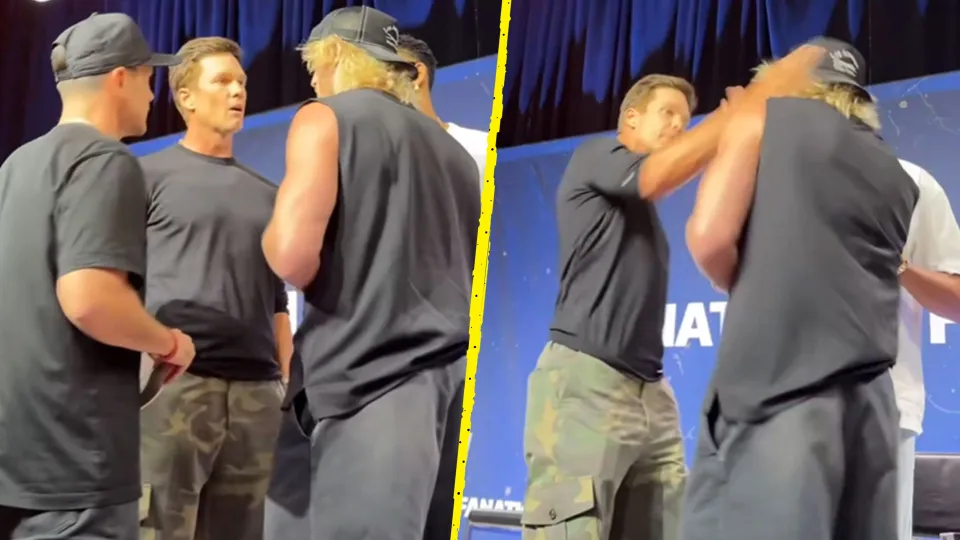
What happened — and why this is a journalistic question
Multiple news outlets report that Tom Brady slapped Logan Paul onstage during Fanatics Fest. NFL.com and MassLive carried accounts describing the onstage contact; Sports Illustrated frames the incident as the latest episode in a months-long feud between the two. Those are the basic facts in circulation: an onstage physical interaction involving two high-profile figures at a branded fan event.
The journalistic question isn’t only whether a strike occurred — the outlets agree that it did — but what led up to it, how intentional the act was, how parties describe it afterward, and what legal or contractual consequences might follow. Different outlets emphasize different elements: timeline and motive, legal threats, or the spectacle and promotional context. Laying those pieces side-by-side helps separate what’s reported from what’s unresolved.
How this fits into a months-long public feud
Sports Illustrated and USA Today provide background suggesting the slap didn’t appear in a vacuum. They recount a build-up of public jabs and stunts between Brady and Logan Paul stretching back months — including an NSFW greeting at a World Cup event reported by USA Today — and describe escalating encounters that made a public confrontation more likely.
Context matters because it helps explain motive and audience expectation. When two public figures trade insults or theatrical confrontations, their appearances at fan events often carry a performative element: some exchanges are pre-scripted stunts, others are spontaneous. The available reporting points to a feud that had both staged elements (promotional banter, teases about wrestling matches) and genuinely antagonistic social-media posts.
What the reporting actually establishes
Factually, the reports establish three things: 1) an onstage slap or strike between Tom Brady and Logan Paul at Fanatics Fest is widely reported by outlets that attended or reviewed footage; 2) the incident follows months of public back-and-forth between the two, including taunts and teases of wrestling-style encounters; 3) Logan Paul has publicly stated he is pursuing legal action, according to entertainment outlets that quoted him.
What the reporting does not establish is the legal outcome (no court filing or police report has been supplied in these summaries), who initiated the physical contact beyond differing accounts, whether the moment was prearranged as part of a show, and what contractual or insurance provisions Fanatics Fest or the participants might rely on. Those are the unresolved facts journalists and readers should watch next.
If this becomes a legal case, how would it proceed?
Entertainment outlets report Logan Paul saying he’s “suing” Tom Brady. A civil lawsuit would require a plaintiff to file a complaint in a court with proper jurisdiction and to plead legal theories (for example, battery, assault, or damages for emotional distress). Public statements about intending to sue aren’t the same as a filed complaint; they establish intent but not a legal record.
In practice, several things matter: Was the slap a consensual stage bit? Did it cause measurable injury or financial loss? What liability waivers or insurance policies governed Fanatics Fest and the performers? Event contracts often include clauses limiting liability for staged stunts and require releases for interactive segments. Those documents — if produced in litigation or reported by outlets — would materially affect legal exposure.
Why promoters, sponsors and performers treat stunts differently
Fan-focused festivals and athlete appearances balance spectacle with risk. Promoters benefit from viral moments that drive publicity, but they also face reputational and legal exposure if a staged stunt crosses into real harm. NFL.com highlighted Brady’s recent wrestling-tease comments, showing how sporting celebrities now straddle multiple entertainment markets — NFL fame, WWE-style theatrics, influencer culture — each with different norms about physicality and performance.
That mixing of realms creates tradeoffs. A planned ‘slap’ can be marketed as a stunt to boost ticket sales, but if participants later claim it wasn’t consensual, promoters and insurers may be on the hook. For public figures, a physical incident also carries brand risk: sponsors may demand distance, while rival influencers can amplify the conflict for attention and commercial gain.
Public reaction — and how competing outlets framed it
Reaction from social-media figures and peers has been swift. Coverage from Fox News and regional outlets notes provocations from other Paul family members — for example, reporting that Jake Paul sent a message calling the incident fodder for retaliation. Those reactions illustrate how these episodes quickly become ecosystem events: each post, headline, or taunt extends the story beyond the original moment.
Different outlets emphasized different angles: timeline and motive (Sports Illustrated), legal threats (Us Magazine, Just Jared), spectacle and wrestling ties (NFL.com), and local eyewitness description (MassLive). That diversity of emphasis is useful: it shows where independent confirmation exists and where gaps remain.
What we still need to know — and a practical takeaway
To resolve the open questions we need primary documents and direct records: any police report, an actual filed complaint, videos of the moment sourced to reliable repositories, and official statements or contracts from Fanatics Fest organizers. Primary documents would clarify whether the slap was planned, who initiated contact, and whether legal claims have been filed.
For readers watching this play out: treat immediate social-media statements as part of the spectacle until a court filing, police report, or promoter statement provides documentary evidence. If you’re a fan choosing tickets or a brand partner evaluating risk, ask organizers about contractual protections, insurance, and whether staged confrontations are scripted. For journalists, the priority is to obtain primary records and carefully attribute disputed claims rather than adopt any single outlet’s framing as definitive.
Sources reviewed
- Fox News: Jake Paul sends fiery message to Tom Brady after dust-up with Logan Paul: 'Revenge is sweet'
- USA Today: Tom Brady, Logan Paul continue feud with NSFW greeting at World Cup
- Sports Illustrated: Why Tom Brady Slapped Logan Paul: A Timeline of Their Months-Long Feud
- usmagazine.com: Logan Paul Claims He’s ‘Suing’ Tom Brady Over Slap at 2026 Fanatics Fest: ‘Mad Bc I Smoked Him In’
- MassLive: Tom Brady continues feud with Logan Paul, slaps wrestler on stage
- Just Jared: Logan Paul Says He’s ‘Suing’ Tom Brady After Slap at Fanatics Fest
- WFIN: Jake Paul sends fiery message to Tom Brady after dust-up with Logan Paul: ‘Revenge is sweet’
- NFL.com: Tom Brady teases 'at least one match' with WWE, slaps Logan Paul